
LED-enabled electronic labels improve picking accuracy by turning warehouse locations into visible, digitally controlled picking points. When a WMS, ERP, or warehouse task system assigns a pick, the electronic label at the correct rack, shelf, or bin can flash an LED while displaying current item and location information. Instead of relying only on a paper list, memory, or manual location search, the operator receives an immediate visual cue showing where the next material should be picked.
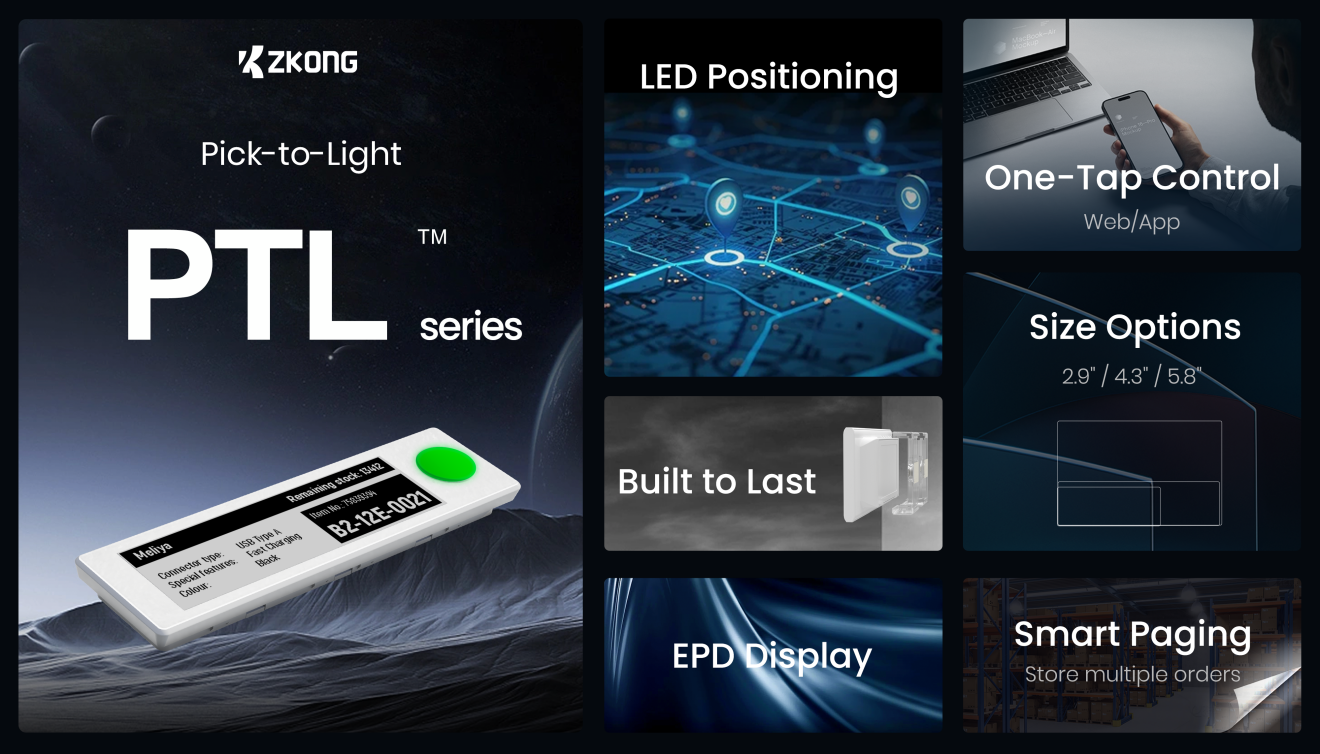
For manufacturing warehouses, this is particularly valuable for components, spare parts, line-side materials, kitting, and replenishment, where similar-looking items, frequent engineering changes, multiple storage zones, and production urgency can increase the risk of picking from the wrong location.
Importantly, an LED-enabled electronic shelf label is best understood as a visual guidance layer, not automatically as a complete pick-to-light system. A robust workflow can combine the LED signal with barcode or handheld scanning, WMS task confirmation, and real-time inventory updates. This combination helps warehouses improve both speed and process control.
ZKONG’s Warehouse & Logistics IoT Solutions are designed around this type of connected warehouse environment, digitizing racks, shelves, bins, picking points, and operational information rather than treating the label as an isolated display.
Manufacturing Warehouse Challenge | Operational Problem | Role of Digital Labels |
Bin and location complexity | Similar racks, shelves, bins, pallets, and storage positions are difficult to distinguish quickly | Digitize shelf, rack, bin, pallet, and storage-location identification |
Picking accuracy pressure | Operators may reach the right aisle but select the wrong component or adjacent bin | Use LED guidance and digital item information to make the target location more visible |
Labor-intensive relabeling | SKU, batch, location, or workflow changes make paper labels obsolete | Update displayed information remotely without repeatedly replacing printed labels |
Multi-zone operations | Receiving, storage, picking, kitting, packing, dispatch, and returns require different information | Use flexible digital displays across multiple operational zones |
Operational visibility | Workers and supervisors need current task, stock, and workflow information | Connect electronic labels with larger operational displays and warehouse systems |
Picking accuracy in a manufacturing warehouse is not simply a fulfillment KPI. It directly affects production continuity.
When the wrong component reaches an assembly line, maintenance team, production cell, or kitting station, the consequence can extend beyond the warehouse. A single incorrect pick may create line-side shortages, additional material verification, kit rework, production delays, inventory discrepancies, or traceability problems.
This is why order-picking accuracy remains one of the central warehouse performance metrics. The Warehousing Education and Research Council’s 2025 DC Measures Report identifies order-picking accuracy as one of the five most widely used warehouse performance measures, alongside on-time shipments, capacity utilization, and dock-to-stock cycle time.
The issue can become even more important in manufacturing environments because the “order” may be an internal material request rather than a customer shipment. The warehouse may be feeding dozens of production stations, each requiring a specific component, revision, batch, quantity, or sequence.
That makes accurate location identification fundamental. The faster operators can answer “Which exact bin contains the material I need?”, the less time and attention they need to spend translating digital instructions into physical warehouse actions.
Manufacturing warehouses often contain thousands of physical storage positions. Even when ERP and WMS data are correct, errors can still occur at the final meter between the worker and the material.
One common problem is visual similarity. Different screws, connectors, bearings, electronic components, spare parts, packaging materials, or subassemblies may be stored in adjacent bins and look nearly identical at first glance.
Another problem is location complexity. A location such as Zone B–Aisle 04–Rack 12–Level 03–Bin 08 is precise inside a WMS, but an operator still has to translate that code into a physical destination. The more densely packed the storage area becomes, the greater the cognitive effort required.
Frequent changes create another source of risk. Materials can move because of slotting changes, new production programs, seasonal demand, engineering changes, batch controls, or temporary staging requirements. Paper labels may remain physically attached even when their information is no longer synchronized with current workflows.
Industry data shows warehouses are gradually moving away from paper-dependent processes. The 2025 Warehouse/DC Operations Survey, conducted by Peerless Research Group and reported by Supply Chain Management Review, found that 40% of respondents still used some paper-based picking methods, down from 44% in 2024, while the use of pick-to-light and voice-based methods increased.
That shift matters because digitizing the instruction is only one part of warehouse transformation. The physical location must also communicate clearly with the worker.
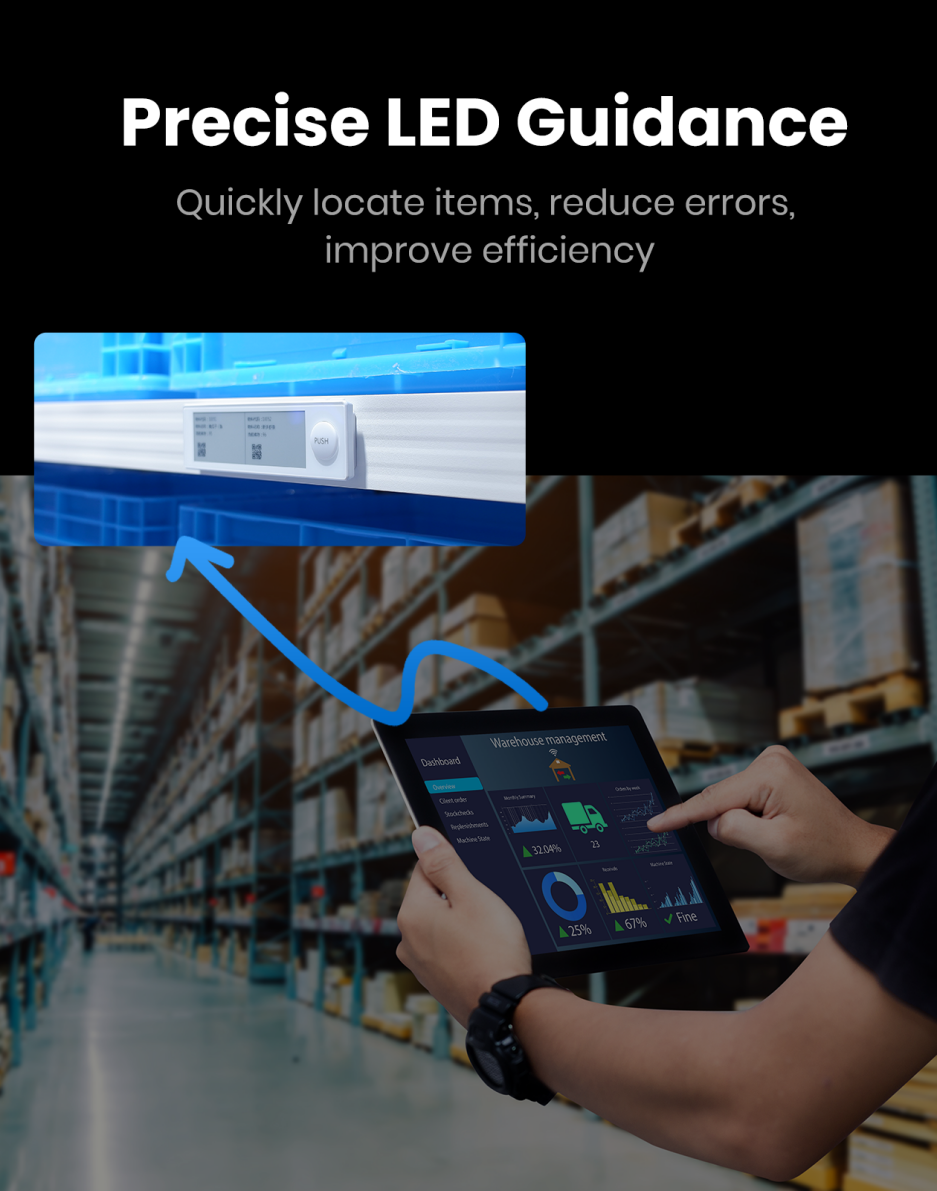
An LED-enabled electronic label turns a passive storage identifier into an active picking endpoint.
In a connected workflow, a warehouse task can originate in the WMS or ERP. The system identifies the required SKU and mapped storage location. The corresponding electronic label then activates its LED, helping the operator recognize the target position visually.
At the same time, the e-paper display can show relevant information such as the material number, item description, bin identifier, quantity, batch reference, or other task-specific information depending on system configuration.
A typical logic is:
WMS/ERP task → target location identified → LED flashes → operator locates bin → item is picked → barcode or task confirmation is completed → warehouse record is updated.
The important distinction is that the LED identifies where to act, while the confirmation mechanism verifies what happened.
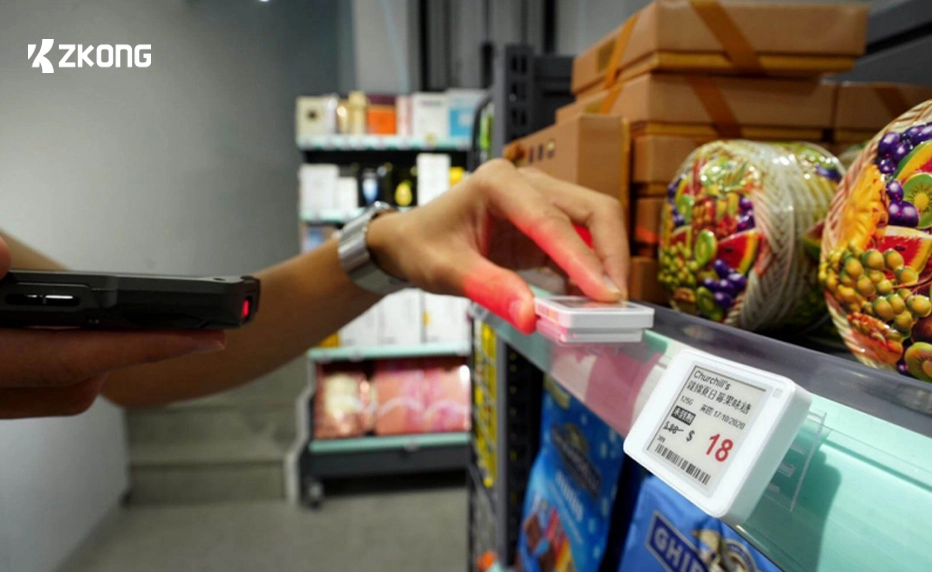
This is why LED guidance and barcode scanning can work well together. The light reduces search effort; the barcode, handheld device, button, or another transaction mechanism can provide positive confirmation.
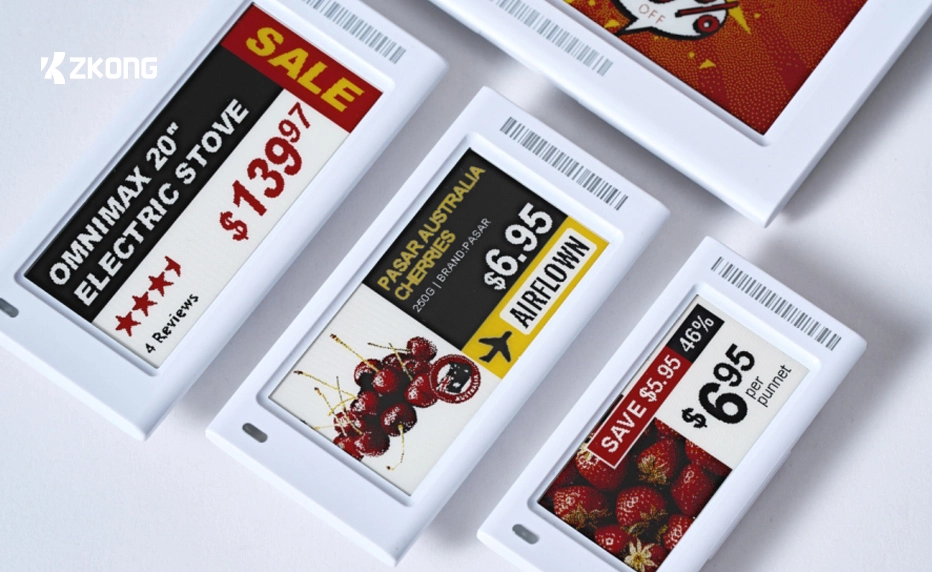
For this type of workflow, the ZKONG Shield Series Electronic Shelf Labels are particularly relevant because Shield Series models include LED indicators together with digital display, cloud-management, Bluetooth, and NFC capabilities. The label can therefore become part of a broader connected location-identification architecture rather than functioning only as a static electronic tag.
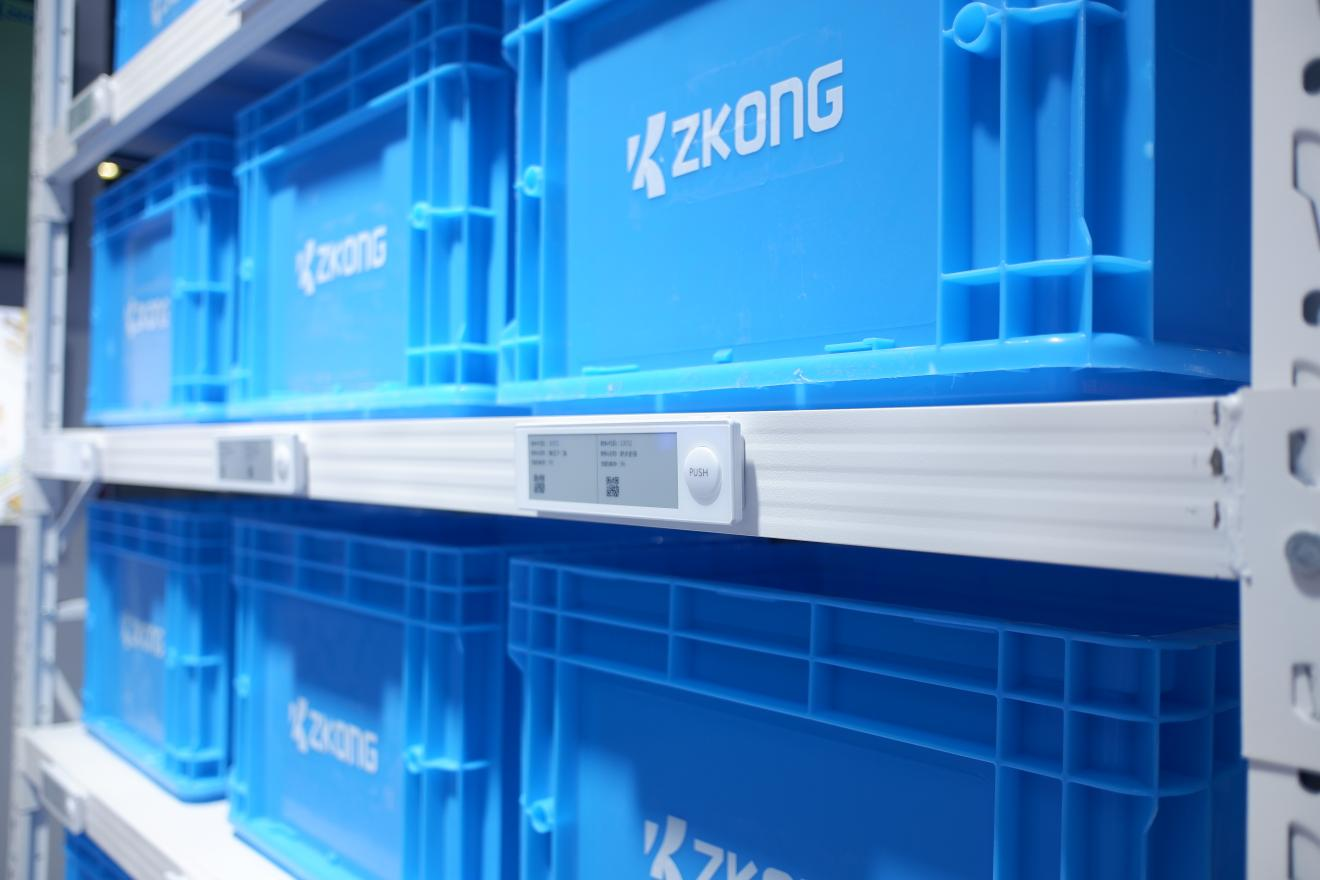
The value of LED guidance is simple: workers can search with their eyes before they search with codes.
Consider an operator entering an aisle with dozens of nearly identical component bins. Without visual guidance, the worker may repeatedly check rack numbers, shelf positions, handheld instructions, and bin identifiers.
With light guidance, the correct destination becomes much easier to isolate.
This does not eliminate the need for item verification. Instead, it reduces the amount of searching required before verification occurs.
Recent academic research supports the potential of visual picking assistance. A peer-reviewed 2025 study published in Sensors compared Pick-by-Paper, Pick-by-Light, and Pick-by-Point methods. In the experiment, incorrect picks represented 6.86% of picks using the paper method versus 2.31% using Pick-by-Light. The researchers also found Pick-by-Light to be the fastest of the tested approaches for order picking and employee adaptation.
These numbers should not be interpreted as a guaranteed result for every warehouse. The research was conducted under controlled experimental conditions, and actual performance depends on layout, SKU characteristics, worker behavior, system design, confirmation logic, and data quality.
The study also highlights an important implementation lesson: the physical relationship between the signal and the bin must be immediately understandable. If workers are uncertain whether a lamp refers to the container above or below it, visual guidance itself can become ambiguous.
For manufacturing warehouses, that means label positioning, mounting rules, LED behavior, and operator training should be standardized before deployment.
LED-enabled labels are especially useful where manufacturing logistics involves many small or visually similar materials.
For production components, the WMS can direct a material handler to the exact bin containing the required component. The LED helps distinguish the target position from adjacent stock, while the display can present the material code and additional identifying information.
For maintenance and spare parts warehouses, digital labels can reduce dependence on workers memorizing where hundreds or thousands of low-frequency parts are stored. When a maintenance request is issued, the required location can be highlighted digitally.
For line-side supermarkets, electronic labels can help connect central warehouse inventory with material points located closer to production cells. Information can change without printing and attaching a new paper label whenever materials, Kanban quantities, or production requirements change.
This becomes increasingly useful when the same warehouse supports multiple production lines or product variants.
Rather than treating every storage position as a fixed printed identifier, the warehouse can create a network of software-controlled physical locations.
That distinction is central to a smart manufacturing warehouse: data in the WMS and information at the rack should represent the same operational reality.
Visual guidance is not limited to outbound picking. The same infrastructure can support replenishment, put-away, kitting, and line-side material preparation.
During replenishment, the system can identify which forward-pick bin requires material and activate the corresponding label. The replenishment operator is guided to the correct destination rather than relying only on a replenishment list.
During kitting, digital labels can help workers move through a sequence of required components. As each material is picked and confirmed, the workflow can proceed to the next location.
This is particularly useful for high-mix manufacturing, where kits may vary by product configuration, work order, production batch, or customer specification.
Digital labels can also separate location guidance from information density.
Small LED-enabled labels such as ZKONG Shield ESL can serve as highly visible bin-level guidance points. In locations where operators need more detailed information—such as kit preparation areas, line-side staging zones, work-order areas, or material supermarkets—larger full-color e-paper displays can communicate additional instructions.
The ZKONG Essence Series Full-Color ESL Displays, for example, provide larger full-color e-paper formats that can complement bin-level labels where more detailed visual information is required.
The result is not simply a “digital label warehouse.” It is a layered visual communication environment in which different display formats are matched to different operational tasks.
The business case for LED-enabled electronic labels comes from reducing small inefficiencies that occur repeatedly throughout every shift.
The first benefit is fewer location-selection errors. Making the correct picking point visually distinctive helps reduce dependence on memory and manual code interpretation.
The second is less searching. Workers can move toward a visible signal instead of repeatedly comparing a digital or printed list with racks and bins.
The third is faster material flow. When picking, replenishment, kitting, and line-side logistics require fewer pauses for location confirmation, materials can move more predictably between warehouse and production.
The fourth is less manual relabeling. When a SKU, batch, location assignment, or workflow changes, information can be updated through the connected system instead of printing and replacing a new paper label at every location.
The fifth is better consistency across warehouse zones. Receiving, storage, component picking, kitting, packing, dispatch, and returns can use the same digital-location infrastructure while displaying different information according to the workflow.
This matters in an industry where qualified labor remains a major constraint. MHI reported in 2025 that 83% of surveyed manufacturing and supply-chain professionals considered workforce and talent shortages a challenge, while 55% planned to increase investment in supply-chain innovation compared with the previous year.
MHI CEO John Paxton summarized the relationship between people and technology clearly:
“Technology and talent are the fuel of any successful supply chain operation.”
MHI: Technology and the Supply Chain Talent Gap
LED-enabled labels fit this human-centered automation model well. They do not require the warehouse to remove operators from every workflow. Instead, they provide workers with clearer, more immediate information at the point where the physical task occurs.

Successful implementation depends more on workflow design than on simply attaching digital labels to racks.
Before deployment, manufacturers should prepare the following:
Clean location master data: Every rack, shelf, bin, pallet position, and line-side point should have a unique and stable digital identity.
WMS or ERP integration logic: Define how picking, replenishment, put-away, kitting, and exception tasks will trigger label updates or LED signals.
A confirmation method: Decide whether picks will be confirmed using barcode scanning, handheld devices, buttons, RFID, or another transaction mechanism. LED guidance alone identifies the target but does not necessarily verify the completed pick.
Standard LED rules: Define colors, flashing patterns, task priorities, and exception behavior so signals have one consistent meaning across the facility.
Physical mounting standards: Ensure workers can immediately understand which light belongs to which bin or location.
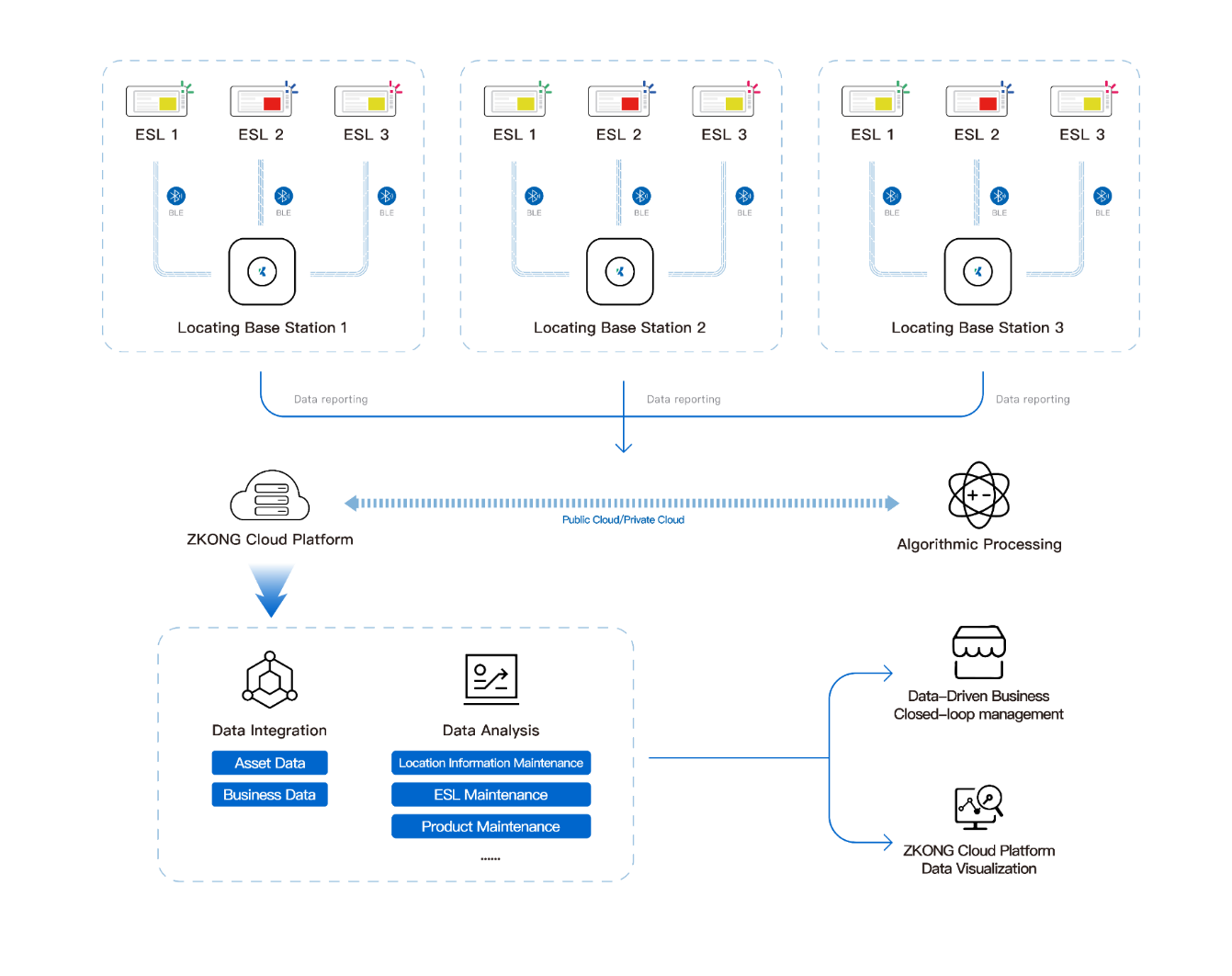
Wireless and infrastructure coverage: Validate base-station or wireless coverage throughout racks, storage areas, line-side zones, and other intended deployment locations.
Display templates: Decide which information operators need at bin level and which information belongs on larger operational displays.
Pilot KPIs: Measure picking accuracy, search time, lines picked per hour, replenishment response time, training time, and exception frequency before and after deployment.
Safety review: Visual guidance must complement—not interfere with—safe material-handling procedures, aisle visibility, vehicle movements, and established warehouse safety practices.
Data standards should also be considered where digital labels interact with barcodes and supply-chain identifiers. The GS1 General Specifications Version 25.0, published in January 2025, provides the current global framework for GS1 barcodes and identification keys used across supply-chain processes.
Safety cannot be separated from warehouse digitization either. OSHA’s current warehousing guidance emphasizes that warehouses involve a constantly moving mix of people, vehicles, equipment, storage systems, and material-handling activities, and specifically recommends following safe procedures when picking up, putting down, and stacking loads.
The objective, therefore, should not be to add more lights to a warehouse. It should be to build a clearer digital connection between the warehouse system, the physical location, and the worker performing the task.
For manufacturing warehouses facing bin complexity, picking accuracy pressure, frequent relabeling, multi-zone operations, and limited real-time visibility, LED-enabled electronic labels provide a practical step toward that goal.
By combining WMS/ERP data, digital location identification, LED visual guidance, task confirmation, and real-time information updates, manufacturers can make manual material handling more accurate without requiring every warehouse process to become fully automated.
ZKONG’s Warehouse & Logistics IoT Solutions combine electronic labels, cloud-based management, and digital warehouse displays to help digitize bins, racks, picking points, and operational information. For LED-guided bin and rack workflows, the ZKONG Shield Series can serve as the primary visual guidance layer, while the ZKONG Essence Series can support locations where larger, richer visual information is required.
The result is a warehouse in which workers spend less time asking “Where is the material?” and more time moving the right material to the right place at the right time.


 Electronic Shelf Labels
  Digital Signage
  Cloud Platform
  ESL Accessory
  中文
中文 English
 日本語
日本語 français
 Deutsch