
Fashion retailers need digital price tags because fashion pricing, promotions, product availability, and seasonal campaigns now change faster than printed labels can efficiently support. Electronic shelf labels (ESLs) allow retailers to update prices and product information centrally, synchronize store communication with online channels, reduce manual relabeling, and connect physical displays with digital product journeys through QR codes and connected retail systems.
This matters especially in omnichannel fashion retail, where shoppers may discover a product on social media, compare prices online, visit a store to try it on, check another color or size on their phone, and complete the purchase through whichever channel is most convenient.
Recent research reinforces this shift. PwC reported that 51% of consumers planned to buy online while 53% planned to make in-person purchases, demonstrating that physical and digital retail increasingly coexist rather than compete.
For fashion retailers, the challenge is therefore no longer simply displaying a price. It is keeping price, promotion, product information, availability and brand communication consistent across a constantly changing omnichannel journey.
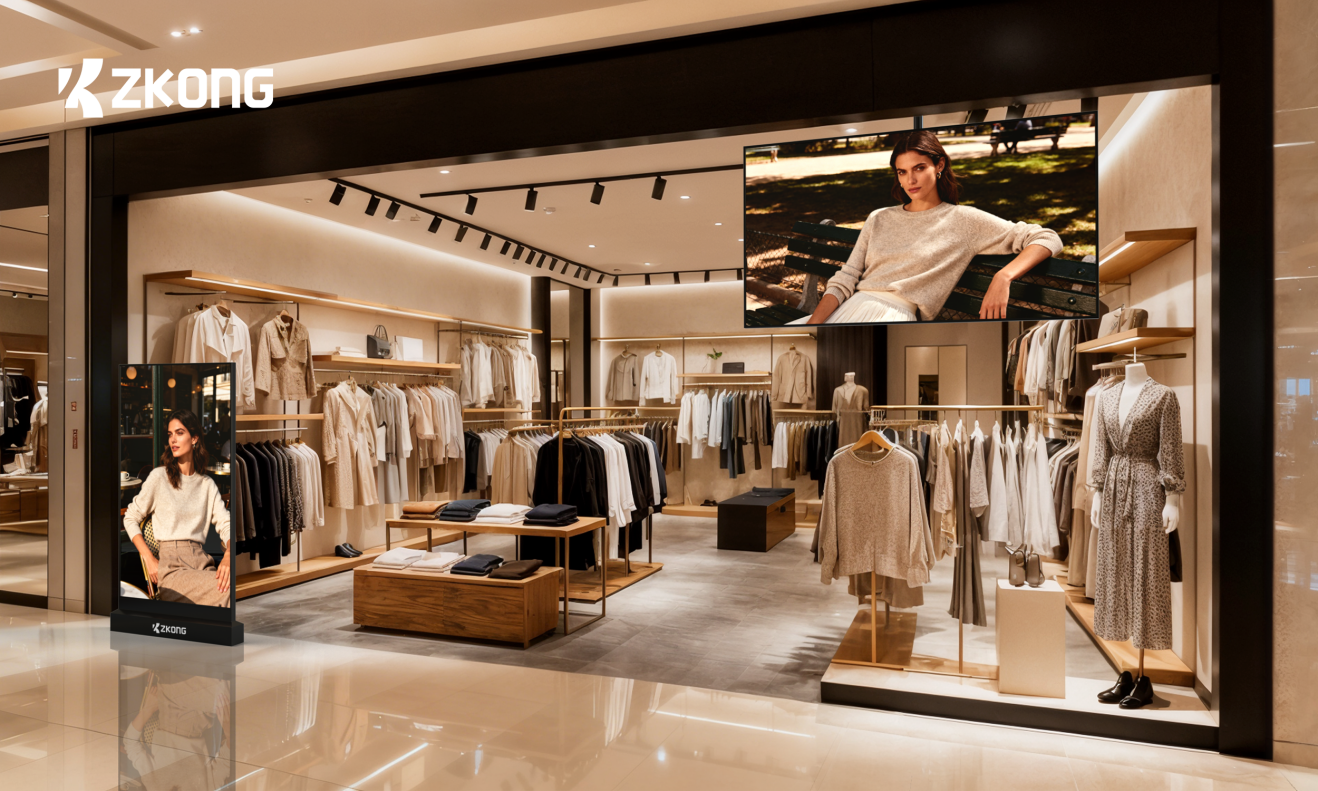
Fashion retail operates on a much faster merchandising cycle than many traditional shelf-based retail categories.
A product can move from new arrival → regular selling period → promotional campaign → seasonal markdown → clearance within a relatively short period. Some retailers also operate limited collections, capsule launches, regional campaigns, member events and flash promotions alongside their normal seasonal calendar.
Every stage may require a different price or promotional message.
That creates one of the fundamental challenges of fashion store operations: the physical price display needs to change at almost the same speed as the commercial strategy behind it.
McKinsey’s State of Fashion 2025 highlights the economic pressure behind this trend, noting that shoppers are becoming increasingly value-conscious. The report states:
“Consumers, affected by the recent period of high inflation, are increasingly price sensitive.”
McKinsey also found that only 20% of fashion executives surveyed expected consumer sentiment to improve in 2025, while 39% expected industry conditions to worsen. Retailers consequently planned to broaden price ranges and sharpen their value propositions.
For fashion stores, more price-sensitive customers mean pricing and promotional execution become increasingly important at the exact place where purchase decisions happen.
Online merchandising teams can change a product price, launch a promotion or apply a member discount almost instantly.
Physical stores traditionally cannot.
A retailer running hundreds of stores may need employees to identify affected products, print new labels, distribute them across departments and manually replace existing tickets. By the time the process is complete, an online campaign may already have changed again.
This creates an omnichannel pricing gap.
A shopper may see one price on a retailer’s website and another beside the same item in a store. Even when checkout systems eventually apply the correct promotion, inconsistent shelf or rack communication can create unnecessary uncertainty.
This is particularly important because fashion consumers actively compare prices.
KPMG’s 2025 Canadian retail survey found that 57% of respondents said finding a good discount was more likely to influence their behavior than brand loyalty. KPMG also noted that instant online product comparison is putting additional pressure on retailers to adopt more strategic pricing approaches.
Digital price tags help narrow this operational gap by turning the physical price display into a digitally manageable endpoint.
Price changes become especially labor-intensive when they affect hundreds or thousands of SKUs.
Employees may need to update garments on racks, folded apparel on tables, footwear displays, accessories, branded counters and promotional zones. Multiple sizes and colors further increase the complexity of store execution.
The operational problem becomes larger when campaigns must be deployed across dozens or hundreds of stores.
Digital price tags change the workflow from:
Head Office → Price File → Store Team → Print Labels → Find Products → Replace Labels
to a more centralized model:
Head Office / Retail System → Cloud Platform → Store Network → Digital Price Tags
The exact architecture depends on the retailer’s POS, ERP, inventory and promotion systems, but the principle is straightforward: information can be distributed digitally rather than physically reprinted each time something changes.
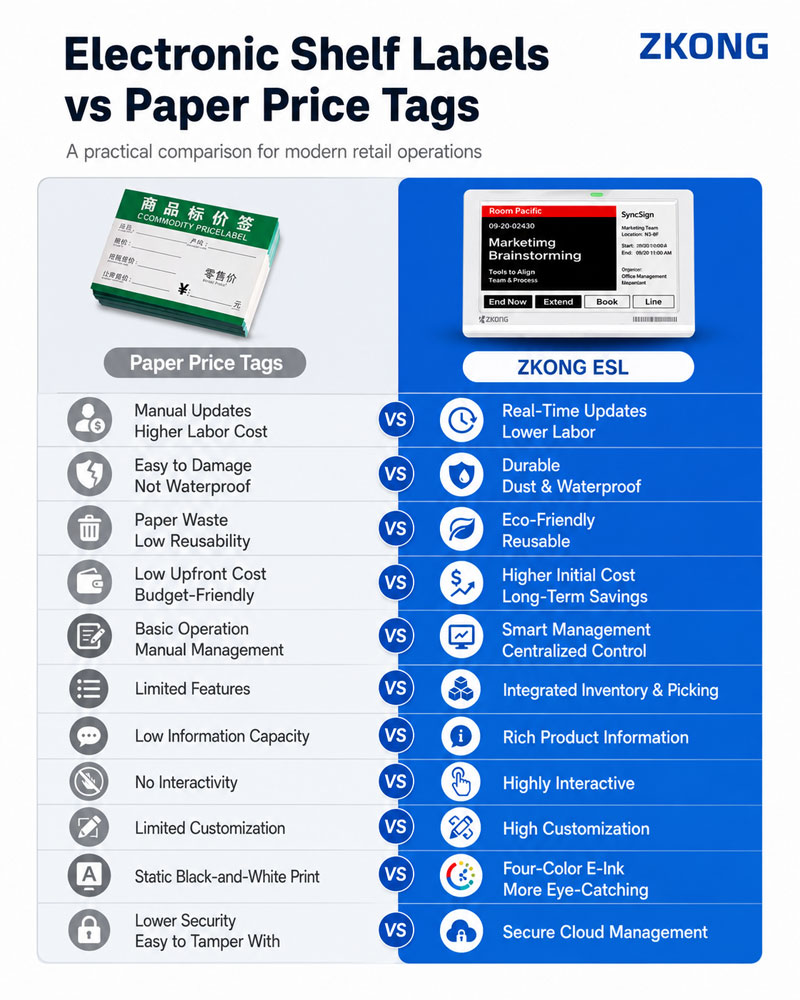
Omnichannel retail has changed what shoppers expect from price information.
Customers increasingly treat a retailer’s website, mobile app and physical store as different interfaces of the same brand. A customer who finds a jacket online at a promotional price generally does not think of the store as a separate pricing environment when visiting later that day.
Deloitte’s 2025 research into the future of fashion retail describes younger shoppers as moving fluidly between digital and physical touchpoints. It found that more than half of Gen Z consumers expect consistent experiences across mobile, online and in-store interactions.
That expectation makes pricing consistency part of the customer experience.
A fashion retailer may simultaneously manage:
online prices, store prices, seasonal markdowns, loyalty prices, regional promotions, temporary campaigns and clearance pricing.
With printed labels, every physical change introduces another manual execution step.
With connected digital price tags, store displays can become part of the retailer’s wider digital infrastructure. When integrated with appropriate retail management systems, approved price and promotion changes can be distributed from a central platform to relevant stores or displays.
The goal is not simply faster price changing. It is stronger synchronization between digital commerce and physical retail.
Cloud-connected electronic shelf labels allow authorized teams to manage information across stores from a centralized platform.
Rather than asking every location to manually recreate the same promotion, retailers can define pricing or content centrally and distribute approved updates across their store network.
For multi-store fashion retailers, this can support several operational models.
A national campaign can be deployed across every location, while a regional markdown may be limited to selected stores. Individual locations can also receive different promotional information when inventory levels, store formats or local commercial conditions require it.
Centralized management therefore gives retailers greater control without requiring every store to operate independently.
Fashion pricing is rarely limited to one number.
Depending on screen size, template design and system configuration, digital price tags can communicate information such as:
regular price, promotional price, discount percentage, member price, product name, style or model reference, QR code and promotional message.
This allows the price display to explain the offer instead of merely showing the final selling price.
For example, a digital label beside a seasonal jacket might show its original price alongside a temporary promotional price. During a loyalty event, the same display could emphasize member pricing. When the campaign ends, the template can return to standard product information without replacing the physical label.
Timing matters in fashion.
Seasonal campaigns often have precise launch dates. Markdown periods may happen in multiple waves. Weekend promotions and loyalty campaigns can have narrow execution windows.
Digital price communication can reduce the gap between commercial decision and store execution.
Instead of requiring employees to replace every affected paper tag before opening, retailers can prepare campaign templates in advance and distribute the relevant content through the connected system.
This is particularly useful for retailers managing large store estates, where even small execution differences between locations can weaken campaign consistency.
Digital price tags become more valuable when they are treated not as isolated screens but as part of a connected omnichannel retail environment.
Physical displays have limited space. Digital channels do not.
A QR code displayed on an ESL can connect a shopper to richer digital content such as a product detail page, styling information, additional images, care instructions, customer reviews, loyalty offers or product availability.
This creates a simple connection:
Physical Product → Digital Price Tag → QR Code → Online Product Information
The shopper can physically inspect the garment while using a phone to access information that would be impractical to print on a conventional paper ticket.
PwC’s recent retail research reflects this hybrid behavior. It reports that consumers increasingly want digital experiences to carry into physical stores and that shoppers commonly supplement store visits with mobile research and price comparison.
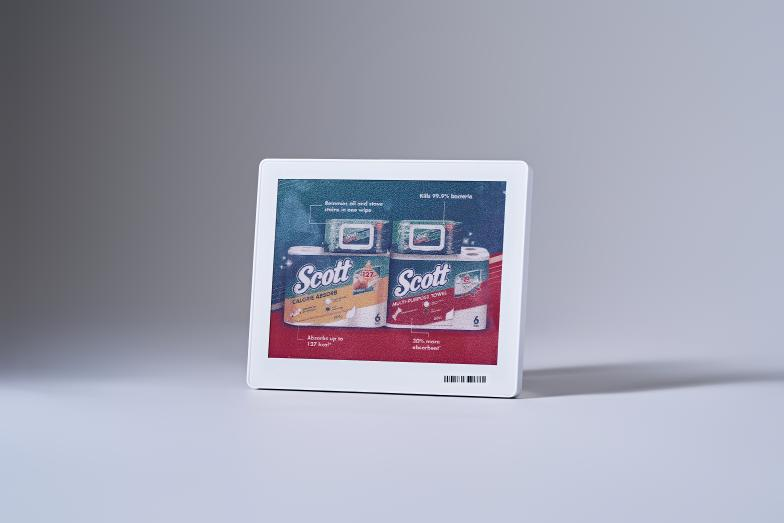
Product choice is particularly complex in fashion because one style may exist across numerous colors and sizes.
When connected with the retailer’s inventory or product information infrastructure, an ESL can potentially show relevant availability information or direct shoppers toward a digital inventory lookup.
Instead of displaying only:
Women’s Jacket — $79
the store communication layer could help answer:
Is Medium available? Does this style come in black? Is another size available elsewhere? Can I order it online?
The specific information displayed will depend on system integration and retailer configuration, but the strategic value is important: digital price tags can become product-information touchpoints rather than static price holders.
Click-and-collect illustrates why online and physical retail can no longer be treated separately.
A shopper may research a garment online, reserve it for pickup, enter the physical store and then discover complementary items while collecting the order.
Similarly, someone browsing in-store may discover that the preferred color or size is unavailable locally but available through the retailer’s online channel.
Deloitte identifies unified commerce infrastructure, real-time availability and flexible fulfillment as important capabilities for the next generation of fashion retail.
Digital price tags can support this environment by placing connected product information directly beside merchandise.
Traditional adhesive shelf labels are not always suitable for fashion fixtures.
Digital price tags can be integrated with appropriate accessories and mounting systems for apparel racks, rails, shelves and display tables.
This is particularly useful for folded clothing, basic apparel ranges, seasonal collections and high-volume product displays where customers need a clear connection between the merchandise and its price.
Screen design also matters.
A visually clean ESL template can provide pricing and product information without competing unnecessarily with the garments themselves.
Footwear and accessories often provide especially strong use cases because merchandise tends to remain associated with structured shelves or display positions.
Digital price tags can be positioned alongside:
shoes, handbags, luggage, watches, jewelry accessories, sportswear, outdoor equipment and seasonal accessories.
Where relevant, the display can supplement price information with model references, promotional messages or digital links to additional variants.
Department stores create another operational challenge because multiple brands, campaigns and merchandising teams may coexist within the same building.
Digital price tags can support regular merchandise areas while larger LCD digital signage can communicate higher-impact campaign content.
The two technologies perform different jobs.
Electronic shelf labels are suited to persistent product-level information such as price, promotion and SKU details. Digital signage is better suited to visual merchandising, campaign imagery, product storytelling and dynamic promotional content.
Used together, they can create a more connected digital communication layer across the store.
One of the most immediate operational benefits is reducing repetitive label replacement.
Employees still need to manage merchandise, displays and store execution, but routine price changes no longer need to translate automatically into thousands of individual printing and replacement tasks.
This allows more store labor to remain focused on merchandising, customer assistance, replenishment and maintaining the shopping environment.
When shelf or rack communication is disconnected from the central pricing system, discrepancies can occur between displayed prices and checkout prices.
Digital price tags cannot solve inconsistent source data by themselves, but when properly integrated into the retailer’s pricing infrastructure they can reduce one important source of error: outdated physical labels.
A centrally managed pricing workflow can therefore improve consistency between what shoppers see and what store systems are instructed to charge.
Fashion campaigns have short commercial windows.
A markdown launched one day late has already lost part of its selling period.
Digital price communication allows retailers to prepare, schedule and distribute changes more efficiently, making it easier to support new collections, mid-season promotions, clearance events, loyalty campaigns and localized offers.
For a retailer operating 10 stores, manual execution may be manageable.
At 100, 500 or 1,000 locations, consistency becomes significantly harder.
Centralized digital price management allows headquarters to establish standardized templates and distribute information across the network while still supporting store groups or regional variations.
The result is not only operational efficiency.
It can also strengthen brand consistency, ensuring that shoppers receive comparable price and promotional communication regardless of which location they visit.
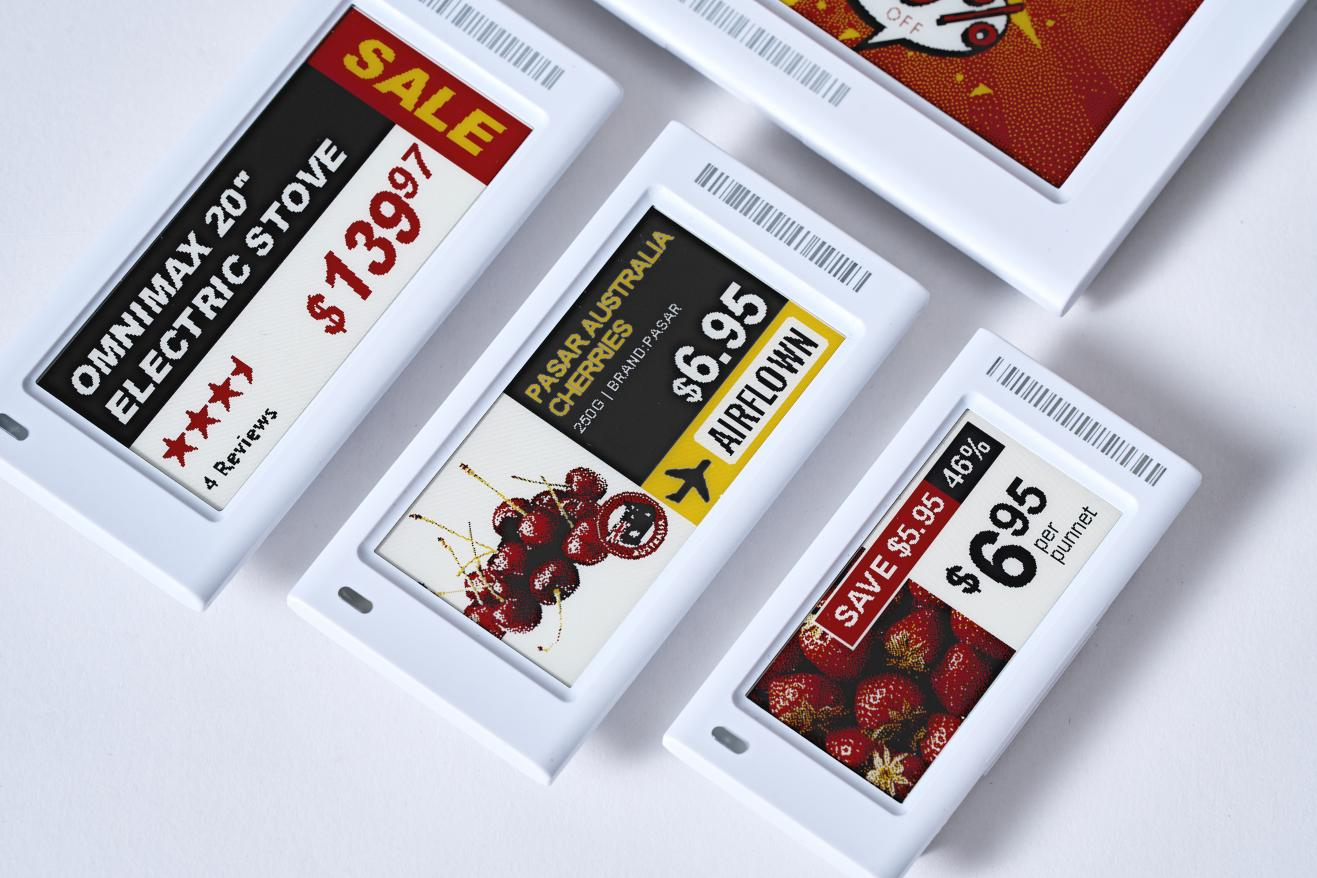
The best digital price tag for a fashion store is not necessarily the largest display.
Retailers should evaluate the relationship between screen size, viewing distance, fixture design and the amount of information required.
Small ESLs may work effectively for racks and footwear shelves where price and basic product information are sufficient. Larger displays may be preferable when retailers need additional promotional content, QR codes or more detailed product information.
Physical design is equally important.
Fashion environments place greater emphasis on visual merchandising than many traditional shelf-based retail formats, so display shape, bezel design, mounting accessories and screen appearance should complement the fixture rather than dominate it.
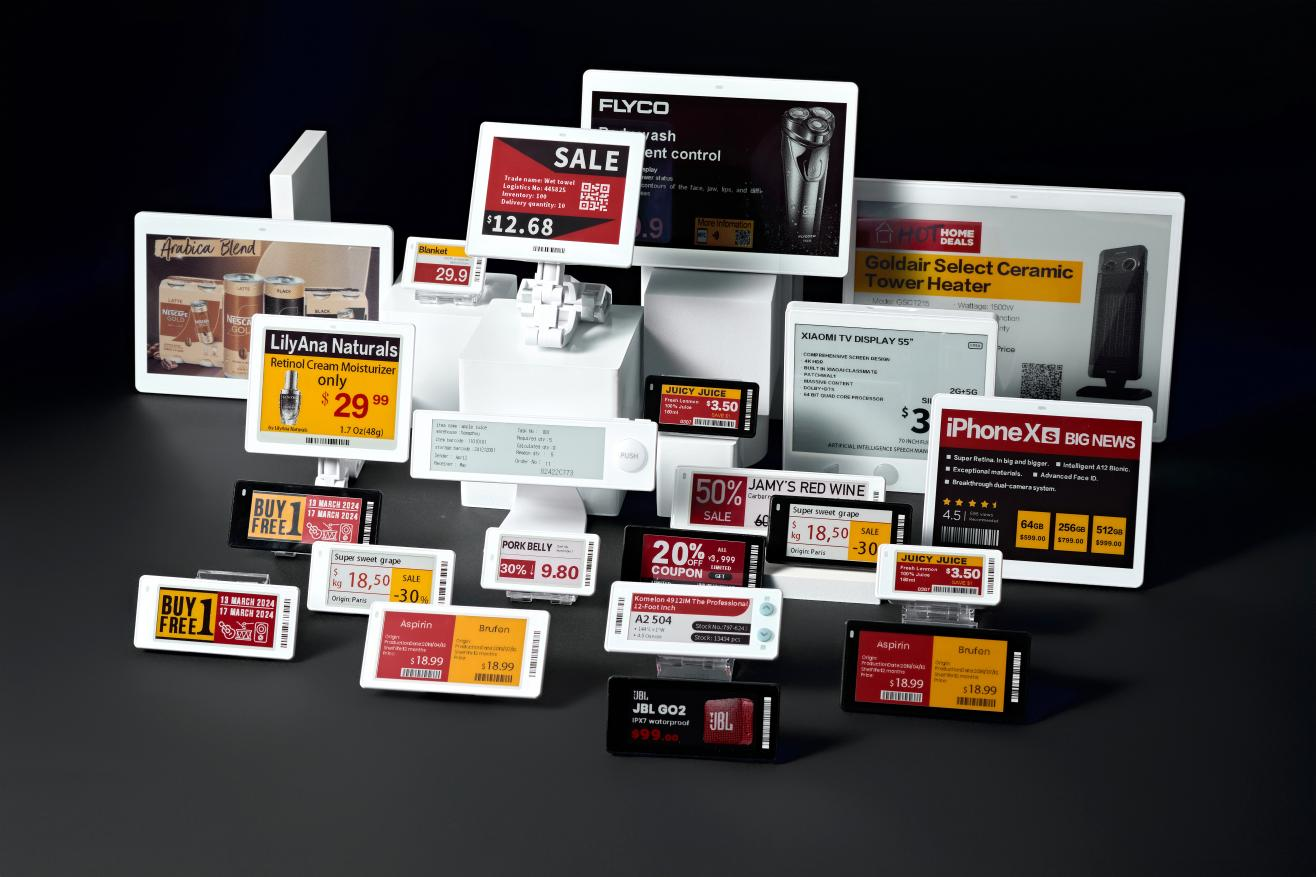
Hardware should not be evaluated in isolation.
For omnichannel fashion retail, the more important question is often whether digital price tags can become part of the retailer’s existing technology ecosystem.
Retailers should consider whether the solution supports centralized management, multi-store deployment, template management, APIs and integration with relevant POS, ERP, inventory, product-information or promotional systems.
The objective should be a clear data flow:
Retail System → Cloud Platform → Store Infrastructure → Digital Price Tag
This infrastructure turns an ESL deployment from a label replacement project into part of the store’s digital transformation strategy.
For fashion retailers, that distinction matters.
The strongest reason to adopt digital price tags is not simply that electronic labels are more modern than paper labels. It is that fashion retail increasingly requires physical stores to operate at digital speed.
Collections change quickly. Promotions change quickly. Customers compare channels instantly. Size, color and inventory information influence purchase decisions. And the store itself remains an essential part of the fashion journey.
Digital price tags give retailers a practical way to make price and product communication more responsive to that reality—helping connect pricing, operations and omnichannel customer experience directly at the point of purchase.
This is the first one.

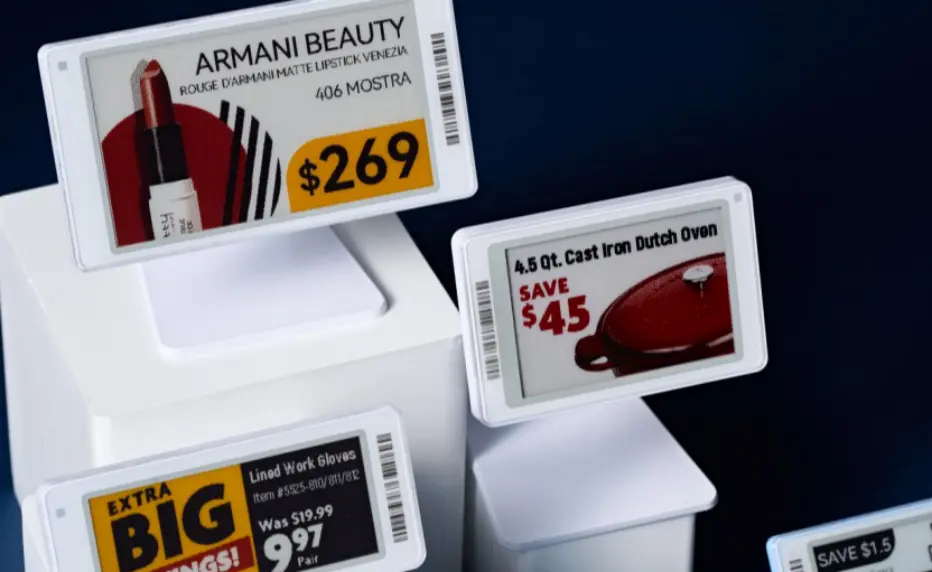


 Electronic Shelf Labels
  Digital Signage
  Cloud Platform
  ESL Accessory
  中文
中文 English
 日本語
日本語 français
 Deutsch