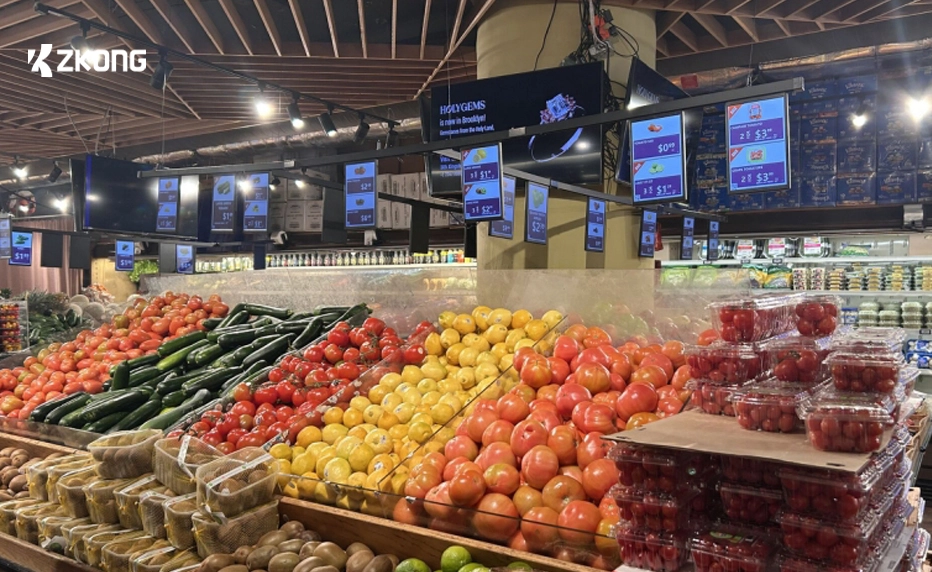

In the process of global retail digital transformation, Electronic Shelf Labels (ESL) , as the core technical carrier of shelf information management, are rapidly transforming from an industry add-on option to a core infrastructure. According to the latest industry research data, the global ESL market size reached 1.98 billion US dollars in 2023 and is expected to exceed 6.24 billion US dollars by 2028, with a compound annual growth rate of 25.8%. The popularization of this technology has not only changed the operation mode of the retail industry but also reshaped the way consumers interact with commodity information. With the deepening implementation of the new retail concept, Chinese manufacturers represented by Zkong are promoting the continuous expansion of ESL application scenarios through technological innovation.
Electronic Shelf Labels (ESL), also known as electronic shelf labels, are electronic display devices with information sending and receiving functions. They are mainly used in supermarkets, convenience stores, pharmacies, and other places to display price information. Placed on shelves, electronic shelf labels can replace traditional paper price labels. Each electronic shelf label is connected to the computer database through wired or wireless networks, and the latest commodity information is displayed on the electronic shelf label screen.
1. Improvement of Retail Operation Efficiency
The electronic shelf label system brings direct value to retailers in significantly reducing labor costs. Field research data shows that large supermarkets using ESL systems have reduced their labor demand for price label maintenance by more than 80%, and the price error rate has dropped from 3-5% in the traditional mode to less than 0.1%. What's more noteworthy is that the real-time price adjustment function of the system shortens the response time of promotional activities from hours to minutes.
In terms of inventory management, the intelligent ESL system integrated with RFID technology can achieve accurate tracking at the single product level. Practice has shown that the system increases inventory efficiency by 40 times, improves inventory accuracy to over 99.9%, and reduces losses due to expiration by 62%.
2. Innovation in Consumer Experience
Modern ESL technology is reshaping the in-store shopping experience. Breaking down the barriers of price information, through second-level synchronized dynamic pricing, such as the price disputes in Hema Supermarket reduced by 90% after using it; Watsons' omni-channel sales increased by 25%. This small electronic screen is deconstructing the traditional "people-goods-store" relationship, enabling each product to have personalized conversations with consumers.

1. The Promotion of New Retail Drives the Accelerated Development of Electronic Shelf Labels
As the digital economy and retail digitization have become important components of the national strategic development, and with the continuous deepening of supply-side and retail-side reforms and demand-side upgrading, new retail has shown strong growth. IoT technology has been rapidly popularized in offline stores, and e-commerce channels are also testing offline stores. Comprehensive digitization has become an important direction for the development of the new retail industry. In this context, the popularization and development of electronic shelf labels have ushered in an unprecedented acceleration period.
2. Expanding Demand for Efficient Enterprise Management and Cost Optimization
New retail emphasizes being consumer-centric and achieving precision marketing through big data analysis. As an important part of IoT technology, electronic shelf labels can update commodity prices, promotion information, and inventory status in real-time, helping retailers quickly respond to market changes, realize precise pricing of commodities, and dynamically adjust promotion strategies. This flexibility not only improves the customer shopping experience but also enhances the store's operational efficiency and profitability. At the same time, in traditional retail, adjusting commodity prices requires manually replacing paper price tags one by one, which is time-consuming and error-prone. The introduction of electronic shelf labels makes price adjustment easy and fast, as batch updates can be done through the background system, greatly saving labor and time costs.
3. Technological Progress Drives the Rapid Improvement of Electronic Shelf Label System Performance
In recent years, the continuous progress of display screens and communication technologies has driven the electronic shelf label system to achieve performance improvement and more abundant functions, and the display effect of electronic price tags and customer experience have been significantly improved. At the same time, the progress of communication technology has also enabled electronic shelf label devices to have various functions such as quick lighting and positioning. Combined with the support of big data and artificial intelligence technologies, they can better support customer businesses and bring more business value to customers.

Electronic shelf labels are no longer simple electronic price tags but the core hub of retail digital transformation. With technological progress and the continuous expansion of application scenarios, ESL systems are evolving from cost centers to value-creating centers. For retail enterprises, whether they can grasp the opportunities of operational innovation and experience upgrading brought by ESL technology will largely determine their competitive position in the new retail era.
 Electronic Shelf Labels
 Digital Signage
 Cloud Platform
 ESL Accessory
 中文
中文 English
 日本語
日本語 français
 Deutsch