

For decades, paper price tags have been the default way for retailers to display product prices on shelves. They are simple, inexpensive, and easy to understand. But as retail operations become more digital, more stores are replacing traditional paper tags with electronic shelf labels, also known as ESLs, digital shelf labels, or electronic price tags.
The difference is not just about replacing paper with a screen. It is about how retailers manage pricing accuracy, promotions, labor efficiency, inventory visibility, and customer experience.
In simple terms, paper price tags are suitable for stores with stable prices and limited SKU changes, while electronic shelf labels are more suitable for retailers that need frequent price updates, real-time product information, omnichannel operations, and lower long-term manual work.
Major retailers are already moving in this direction. Walmart announced that it would expand digital shelf labels to 2,300 stores by 2026, allowing price updates across large product ranges to be completed in minutes instead of days.
Paper price tags are printed labels placed on shelves, hooks, display racks, or product areas to show prices, product names, promotions, barcodes, or other basic product details.
They are still widely used because they are:
Low cost to produce
Easy to print and replace
Familiar to store employees and customers
Suitable for small stores or low-frequency price changes
However, paper tags also create several operational problems as store size and SKU complexity increase.
Every time a price changes, staff must print new tags, locate the correct shelf position, remove the old label, and replace it manually. In supermarkets, convenience stores, pharmacies, electronics stores, and chain retail environments, this can become a repetitive and error-prone task.
Paper tags also have limited space. They can usually display only the product name, price, unit price, barcode, and basic promotion text. When retailers want to show QR codes, product origin, stock information, membership pricing, sustainability labels, or online reviews, paper tags quickly become insufficient.

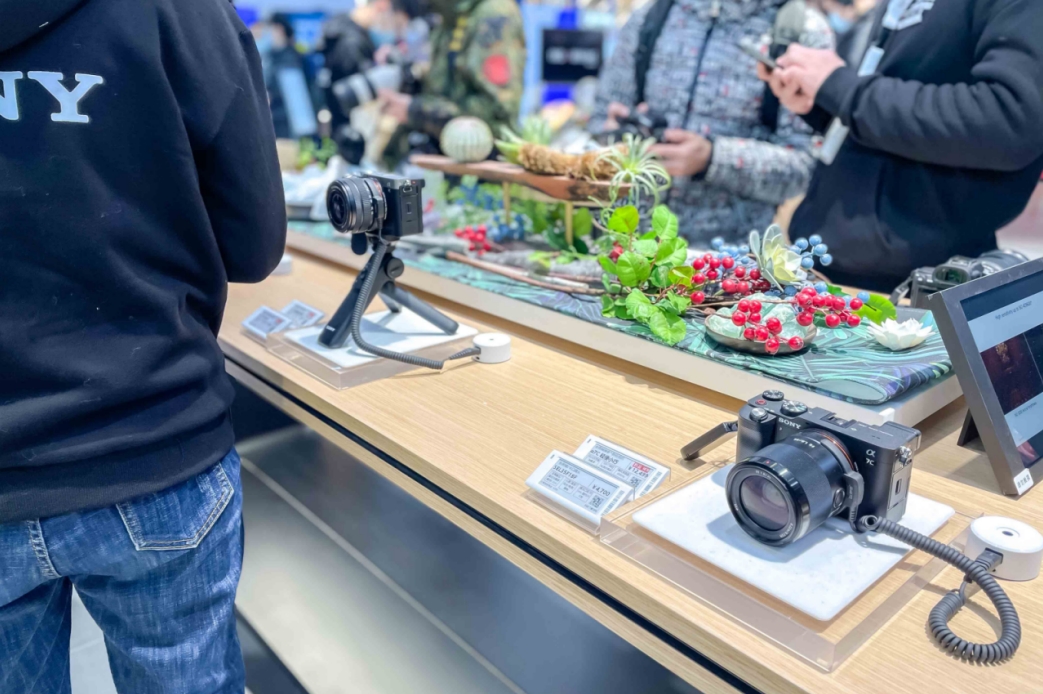
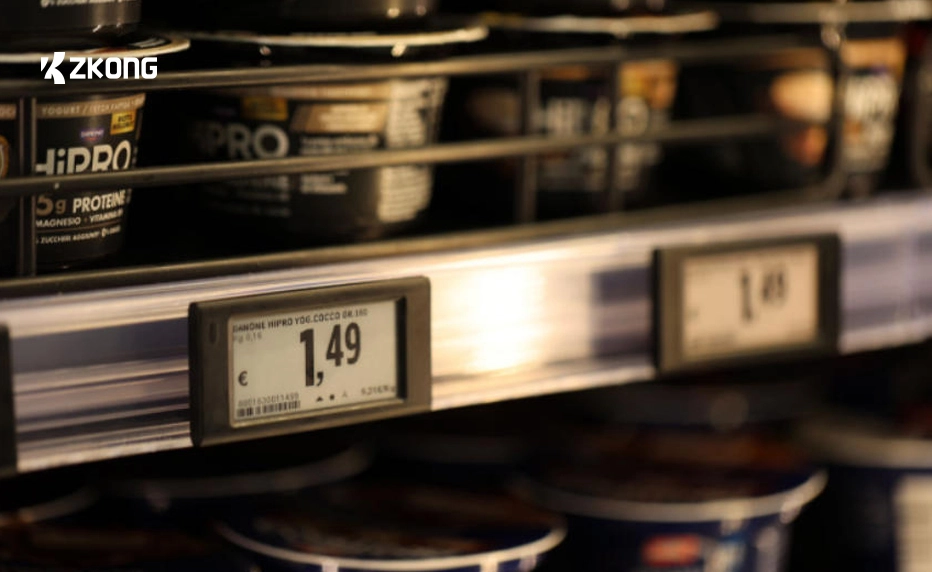
Electronic shelf labels are digital price displays installed at the shelf edge. They usually use low-power e-paper or LCD display technology and connect to a central pricing or store management system.
Instead of changing prices manually, retailers can update ESLs through backend software. Once the price is changed in the system, the shelf label can display the updated price, promotion, QR code, product details, or stock-related information.
Many ESLs use e-paper because it is readable under store lighting and consumes very little power. E-paper technology is “bistable,” which means the display can hold an image without constant power and mainly consumes energy when the screen content changes.
Electronic shelf labels can display more than prices. Depending on the system, they may support:
Product name and price
Promotional messages
QR codes
Barcodes
Inventory status
Picking information for store staff
Product origin or certification information
Membership or loyalty pricing
Multi-language product details
Flashing LED indicators for order picking or replenishment
This makes ESLs not only a pricing tool, but also part of a smart retail infrastructure.
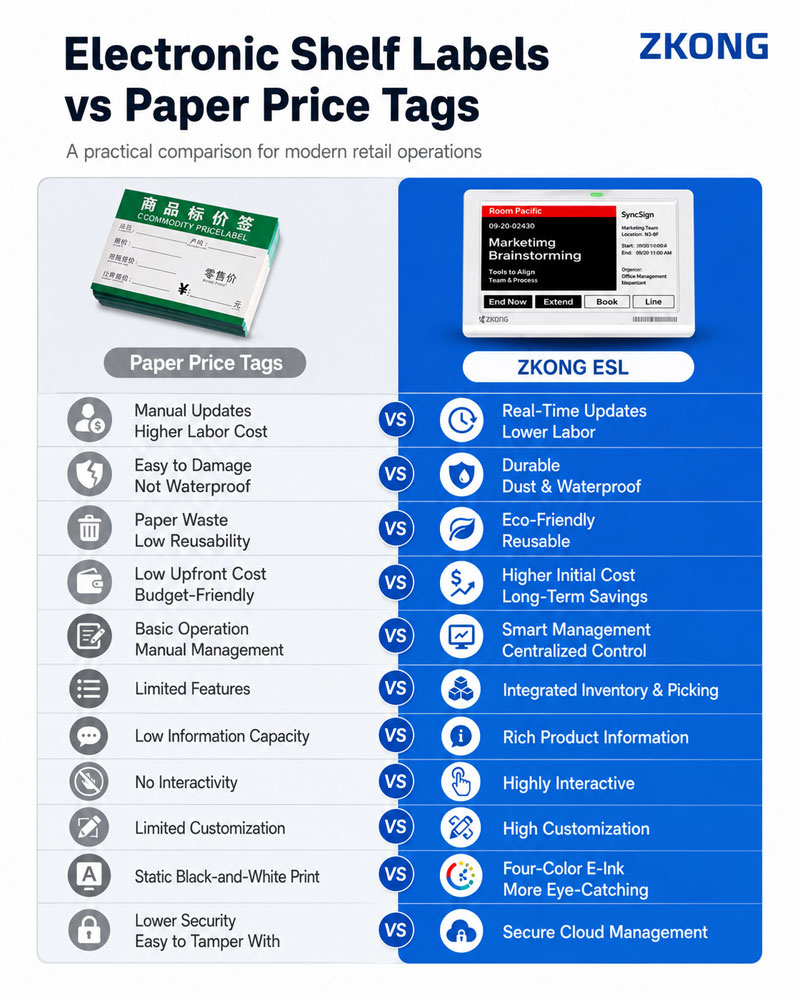
| Comparison Point | Paper Price Tags | Electronic Shelf Labels |
| Price update method | Manual replacement | Centralized digital update ESL cloud platform |
| Labor requirement | High when prices change frequently | Lower after system deployment |
| Pricing accuracy | More likely to have shelf-register mismatch | Easier to keep shelf price aligned with POS |
| Display capacity | Limited by print size | Can show price, QR code, promotion, stock, and more |
| Durability | Easy to tear, stain, fade, or lose | More durable for long-term shelf use |
| Sustainability | Requires repeated paper and printing | Reduces paper and printing waste |
| Initial cost | Low | Higher upfront investment |
| Long-term efficiency | Lower for large stores | Higher for chain stores and high-SKU retailers |
| Customer experience | Basic price communication | More interactive and informative |
| Best fit | Small shops, stable prices, low SKU count | Supermarkets, pharmacies, electronics stores, warehouses, chain retail |
Paper tags are not outdated in every scenario. For many small businesses, they remain practical.
Paper labels are cheap to print. A small store with limited SKUs and stable pricing may not need a digital labeling system.
No software, network, gateway, server, or technical training is needed. Staff only need a printer and label templates.
For pop-up stores, seasonal displays, clearance shelves, or small promotional areas, paper labels can still be fast and flexible.
Paper does not depend on battery life, wireless communication, or backend software. For very simple retail operations, this can be an advantage.
The problem with paper tags appears when the store grows.
For retailers with thousands of SKUs, manual label replacement is slow. Staff must find each product location and replace the label one by one. This can take hours or even days during large-scale promotions or price adjustments.
If a paper tag is not replaced in time, the shelf price may differ from the checkout price. This can cause customer complaints, refund issues, and trust problems.
Paper labels have limited space. They are not ideal for displaying detailed product descriptions, QR codes, online product pages, origin information, or real-time inventory status.
Retailers with frequent promotions may print and discard large numbers of labels. This increases paper usage, printing costs, and waste.
Electronic shelf labels solve many of the operational problems caused by manual paper tags.
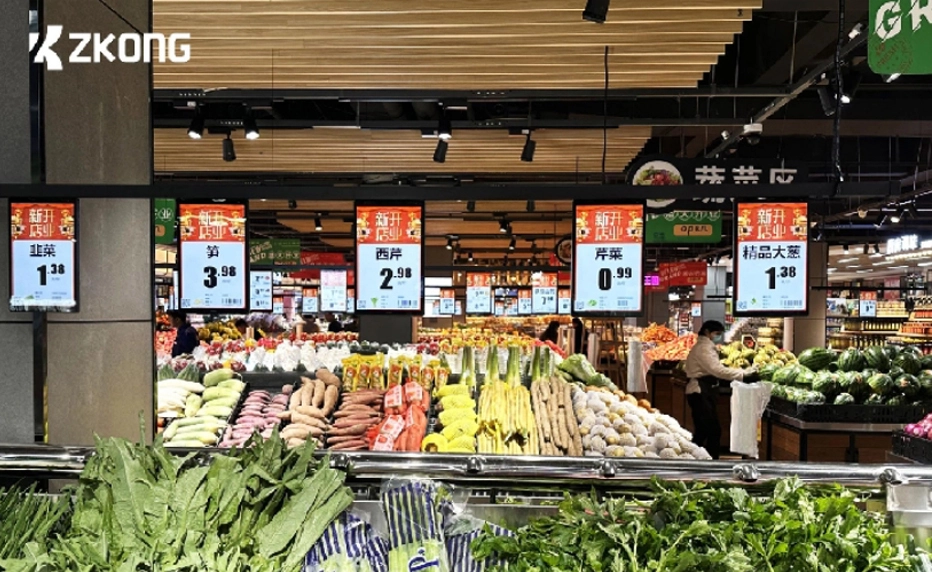
With ESL software, retailers can update prices centrally instead of sending staff to replace labels manually. This is especially useful for supermarkets, pharmacies, electronics retailers, fresh food stores, and chain stores where prices and promotions change frequently.
Walmart’s digital shelf label rollout showed how large-scale price changes can be reduced from a process taking days to a process completed in minutes.
A practical example is ZKONG’s ESL deployment for Danube Home in Dubai, where electronic shelf labels helped the retailer synchronize in-store prices and promotions while reducing the need for manual paper label replacement.
One of the strongest reasons to use ESLs is price consistency. When ESLs are connected to the POS or pricing system, the shelf price can match the checkout price more reliably.
Paper price replacement is repetitive work. ESLs reduce the need for staff to walk through aisles replacing labels after every price change. This does not mean stores no longer need staff; rather, employees can spend more time on customer service, replenishment, merchandising, and online order fulfillment.
For convenience store chains, ZKONG’s 7-Eleven digital label case shows how electronic shelf labels can support standardized price display, faster shelf updates, and more efficient daily store operations.
ESLs can show QR codes, promotional messages, product origin, membership prices, stock alerts, and product details. This helps turn the shelf edge into a digital communication point.
This also aligns with broader retail data trends. GS1 Digital Link, for example, is designed to connect physical products to web-based information through standardized product identifiers and 2D data carriers.
Modern stores are no longer just physical selling spaces. They also support online order picking, local delivery, click-and-collect, and inventory synchronization.
Electronic shelf labels can help staff identify products more quickly, display picking information, and support more accurate inventory workflows.
ESLs reduce the need for repeated printing and disposal of paper tags. For retailers with frequent promotions, this can support sustainability goals and reduce ongoing consumable costs.
Although ESLs offer many advantages, they are not the best choice for every retailer.
Electronic shelf labels require hardware, software, gateways, installation, system integration, and staff training. For small retailers with limited budgets, this upfront cost can be a barrier.
To achieve the full value of ESLs, retailers usually need to connect the labels with POS, ERP, inventory, or pricing systems. If the store’s digital infrastructure is weak, implementation may take more planning.
ESLs are durable, but they still require battery management, network stability, software updates, and occasional replacement. Retailers need a clear maintenance process.
If a store only changes prices occasionally, paper tags may still be more economical. ESLs create the highest value when the store has frequent updates, many SKUs, multiple branches, or complex promotions.
Paper price tags are cheaper at the beginning. However, their hidden costs include labor time, printing materials, pricing errors, customer disputes, and repeated operational work.
Electronic shelf labels are more expensive at the beginning, but their value appears over time through:
Reduced manual label replacement
Faster promotion execution
Better price accuracy
Lower paper and printing usage
Improved staff productivity
Better customer information display
Stronger support for omnichannel retail
For this reason, the right question is not simply:
“Are ESLs cheaper than paper tags?”
A better question is:
“How often does the retailer change prices, and how much does manual price management cost over time?”
To better evaluate the long-term value of ESLs, retailers can use ZKONG’s ESL ROI calculator to estimate potential savings based on their own store operations.
One concern sometimes raised about digital price tags is whether they could be used for aggressive dynamic pricing. This is why transparency matters.
Retailers should clearly define how prices are updated, when prices change, and how shelf prices match checkout prices. ESLs should be used to improve accuracy and efficiency, not to create confusion.
In Walmart’s case, the company stated that its digital labels are not intended for hourly surge pricing and that updates are managed in a controlled way.
For customers, the biggest benefit of ESLs should be simple: the price on the shelf is accurate, easy to read, and consistent with checkout.
Paper price tags are simple, low-cost, and still useful for many small retail environments. But for retailers managing frequent price changes, large SKU volumes, multiple locations, labor pressure, or omnichannel operations, electronic shelf labels offer clear long-term advantages.
The future of shelf labeling is not only about digital displays. It is about building a more accurate, efficient, and connected retail environment.
For modern retailers, electronic shelf labels can support:
Real-time price management
Better customer experience
Reduced manual labor
Improved price accuracy
Lower paper waste
Smarter inventory and store operations
In short, paper price tags are a basic pricing tool, while electronic shelf labels are a digital retail management tool.
Electronic shelf labels are better for retailers that need frequent price updates, better price accuracy, lower manual labor, and digital product information. Paper price tags are still suitable for small stores with stable prices and limited SKUs.
Yes. ESLs reduce the manual work required to print, cut, distribute, and replace paper tags. Staff can update prices through backend software instead of changing labels one by one.
Compared with frequently replaced paper tags, ESLs can reduce paper use, printing, and label waste. However, retailers should also consider battery management, product lifespan, and responsible electronic waste handling.
Yes. Many ESL systems can display QR codes, barcodes, promotional messages, product information, and inventory-related data.
Yes. Paper tags are still useful for small stores, temporary displays, low-SKU environments, and businesses that do not change prices often.
The main reasons are upfront cost, system integration, technical maintenance, lack of internal IT support, and uncertainty about return on investment.
Supermarkets, pharmacies, electronics stores, warehouses, convenience store chains, fresh food retailers, and omnichannel stores benefit most because they manage many SKUs and frequent price changes.

 Electronic Shelf Labels
 Digital Signage
 Cloud Platform
 ESL Accessory
 中文
中文 English
 日本語
日本語 français
 Deutsch