
Hangzhou Zkong Networks Co., Ltd.
How Much Could You Save with ESLs

ESL ROI Calculator

Calculate how much your retail business could save with Electronic Shelf Labels (ESL). Compare labor costs, pricing discrepancies, paper-label waste, and operational efficiency with ZKONG's ESL solutions.

$
Get a Custom ESL Solution

Typical ESL ROI

12–36 Months

Pricing Labor Reduction

Up to 85%

Pricing Accuracy Improvement

Up to 95%

Paper Label Reduction

Up to 98%

Labor savings are usually the largest ROI driver

ESL reduces pricing errors and compliance risk

Cloud ESL systems improve multi-store scalability

Dynamic pricing can increase margin and reduce waste

Retail benchmarks

ESL ROI Benchmarks by Retail Segment

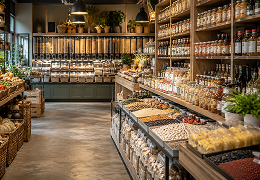
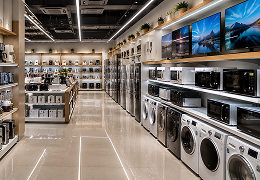
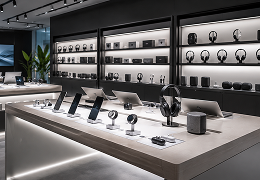
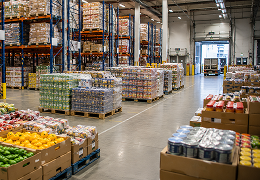
Different retail sectors experience ESL ROI in different ways. Factors such as pricing frequency, labor intensity, promotional complexity

Remark: These benchmark values are estimated for ROI modeling purposes and may vary by country, wage level, store size, pricing frequency, and operational complexity.

ROI Main Factors
Hourly labor cost $28
Price changes per week 5
Annual Waste from Manual Pricing
Current Labor Costs 9 Work Weeks / Year on Pricing
$10,080
Estimated Pricing Errors / Year ~1.7% shelf pricing discrepancies
$850
Estimated Paper & Printing Waste / Year ~2,500 labels/year
$720
Estimated Total Annual Waste $11,650
Estimated Potential Savings with ESL
Labor Savings $8,568
Error Reduction Savings $808
Paper / Printing Savings $706
Estimated Annual Savings $10,082 / year
Cumulative Savings Over Time
Before vs After ESL

ESL transforms retail by reducing manual pricing, minimizing discrepancies, and cutting paper-label waste. Compare costs and efficiency before and after ESL deployment.

Indicators
labor cost
shelf pricing discrepancies
paper labels
paper & printing waste
operations pricing
Before ESL
~$10,080/year
~1.7%
~2,500
~$720/year
~40 h/week
After ESL
~$1,512/year -85% ↓
~0.1% -94% ↓
~50 -98% ↓
~$14/year -98% ↓
~6 h/week -85% ↓

Benchmark values are estimated for ROI modeling and may vary by country, wage level, store size, pricing frequency, and operational complexity.

Proof points

ESL ROI Case Studies

Paper labels vs ESL

Compare ESL vs Paper Labels

Paper price label roll

Paper Labels

  • Manual updates
  • Printing waste
  • Delayed promotions
  • High labor dependency
VS
Electronic Shelf Labels

ESL (Electronic Shelf Labels)

  • Real-time updates
  • Centralized pricing
  • Near-paperless operations
  • Dynamic digital displays

Modern ESL systems are no longer just digital price tags. They are becoming part of the real-time retail infrastructure powering store operations.

Read More
CONVERSION

From Digital Price Tags to Retail Intelligence Infrastructure

ESL as Retail Infrastructure

Modern ESL systems now support

  • Ai Pricing
  • Omnichannel Retail
  • Inventory Visibility
  • Retail Automation
  • Real-Time Promotions

Ready to Modernize Your Retail Pricing Infrastructure?

ESL is becoming part of the digital infrastructure powering modern retail operations.

  • Cloud-Native ESL Platform
  • Multi-Store Management
  • Real-Time Pricing Automation
  • Retail Infrastructure For Future-Ready Stores

Request Your Custom ESL ROI Plan

ESL ROI & Retail Pricing Automation FAQs

What Is ESL ROI?

ESL ROI (Electronic Shelf Label Return on Investment) measures how much financial value retailers gain after implementing an ESL system compared to the total deployment cost.

In most retail environments, the biggest drivers of ESL ROI: labor savings, Pricing accuracy and compliance, Promotion automation, Dynamic pricing opportunities, Omnichannel pricing consistency, Multi-store management.

Read more
How long does ESL ROI usually take?

Most retailers achieve payback within 12–36 months. High-frequency pricing environments such as grocery, pharmacy and electronics typically see the fastest ROI, often within 12–18 months.

Which retail industries achieve the fastest ESL ROI?

Grocery, supermarket, and pharmacy sectors see the fastest ROI due to high pricing frequency and large SKU counts. Fashion and DIY retailers also benefit significantly from automated promotions.

How much labor can ESL reduce?

ZKONG ESL solutions can reduce pricing labor by up to 85%. Stores that previously spent 40 hours per week on manual price changes can reduce this to under 6 hours after ESL deployment.

How do ESL systems improve pricing accuracy?

ESL eliminates manual transcription errors by synchronizing shelf prices directly with your pricing system in real time. Pricing accuracy improves from ~98.3% to >99.9%, reducing compliance risk and customer disputes.

What is included in ESL deployment costs?

ESL deployment costs typically include: ESL hardware (labels, gateways), installation and commissioning, software licensing (cloud platform), training, and ongoing support. ZKONG offers flexible pricing models including SaaS subscriptions.

Can ESL systems support multiple stores?

Yes. ZKONG's cloud-native platform is designed for multi-store management, allowing centralized pricing control across hundreds or thousands of locations simultaneously from a single dashboard.

Can ESL integrate with POS and ERP systems?

ZKONG ESL integrates seamlessly with major POS, ERP, and WMS systems including SAP, Oracle, and custom retail platforms via standard APIs, ensuring real-time price synchronization.

Are ESL systems only used for digital price tags?

No. Modern ESL systems support AI-driven dynamic pricing, omnichannel synchronization, inventory management, customer engagement displays, and real-time promotional campaigns — making them a true retail intelligence infrastructure.

We use cookies to provide you with a better browsing experience, analyze website traffic, and personalize content. By using this website, you agree to our use of cookies. For more details on how we use cookies and your related rights, please visit our Privacy Policy.
Reject All
Accept All