
The retail industry is rapidly shifting toward automation, real-time pricing, and smart store infrastructure. At the center of this transformation are electronic shelf labels (ESL)—also known as digital price tags in retail.
In 2026, Electronic Shelf Labels (ESL) are no longer an experiment—they’re becoming the backbone of profitable, data-driven stores. Retailers in North America, Europe, and the Middle East are turning the shelf edge into a smart, connected touchpoint that drives margin, efficiency, and customer loyalty.
This guide gives you a complete, data-driven understanding of ESL systems, from how they work to cost, ROI, and the best manufacturers in 2026.
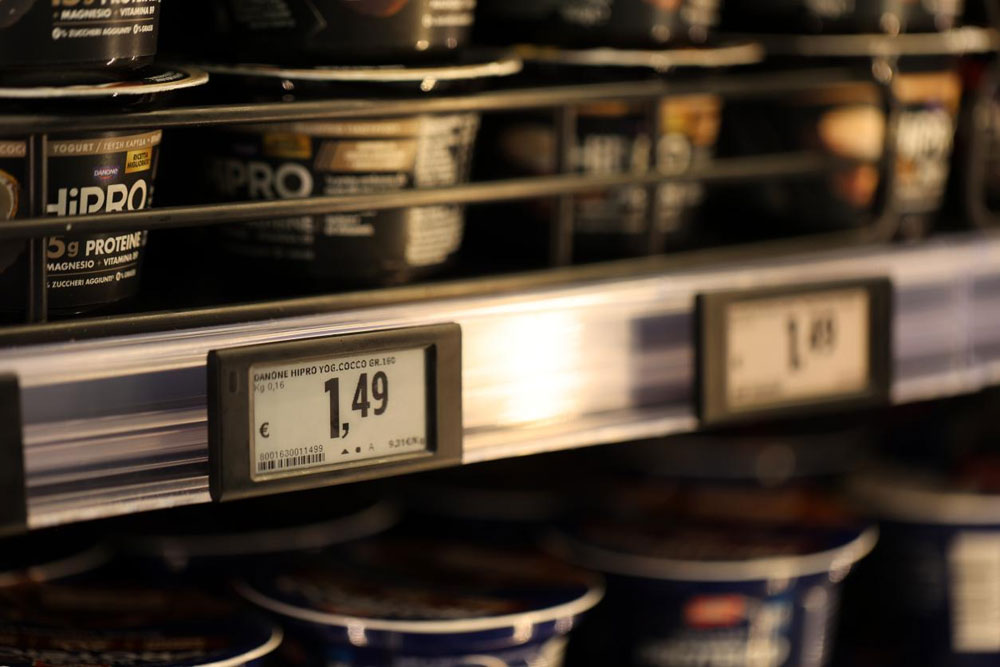
Electronic shelf labels (ESL) are digital display devices (usually e-ink screens) used by retailers to automatically show and update product prices and information on store shelves. Each label is an electronic device mounted on the shelf edge and wirelessly connected to a central system that controls the content displayed.
Instead of manual paper tags, modern ESLs are connected to a centralized system, allowing:
Real-time price updates & promotion
Barcodes or QR codes that link to product pages or apps
Stock or picking information for staff
Remote control across stores
Synchronization with POS and ERP systems
For customers, this means clear, consistent pricing; for retailers, it means full control of the shelf edge—at scale.
In simple terms: ESL = digital price tags + centralized control system
An ESL system turns your pricing strategy into live, in-store action in minutes instead of days. From a high level, it works like this.
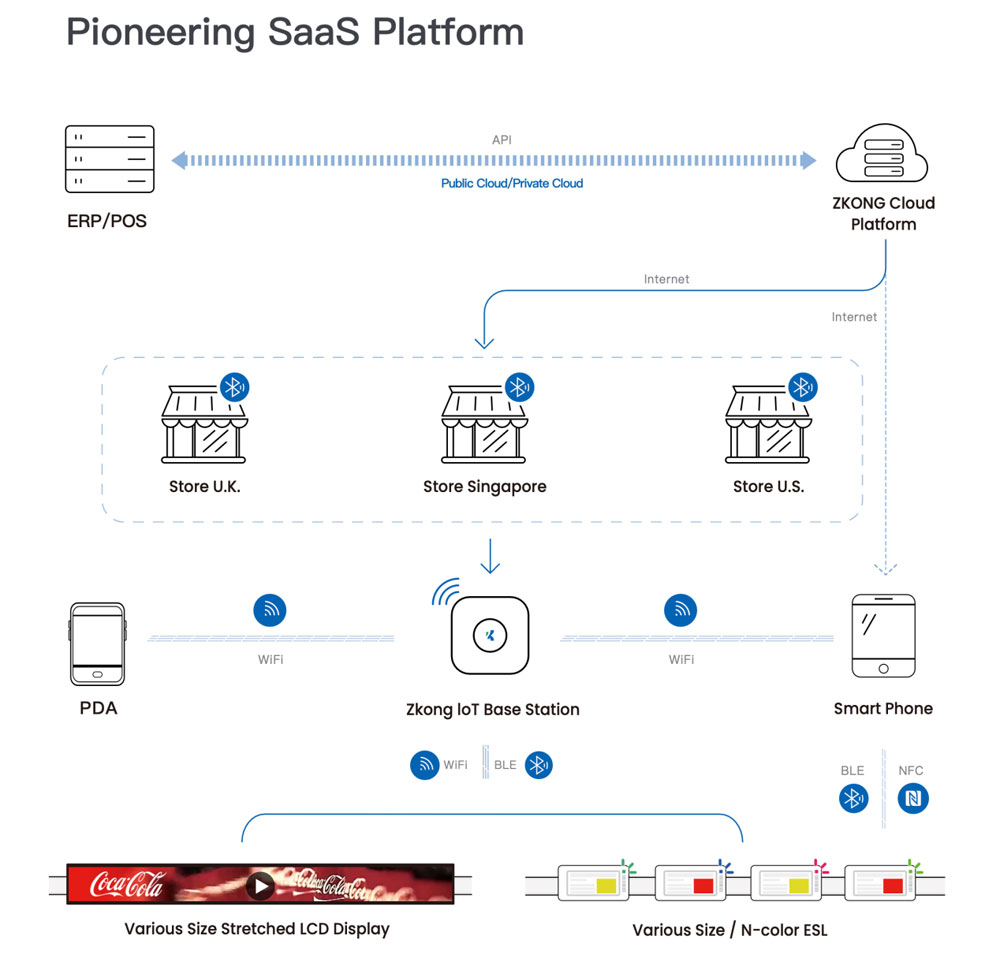
Your ESL platform connects to POS, ERP, and pricing tools. When headquarters launches a promotion or updates a price, the new data flows into the ESL system automatically.
In-store gateways send encrypted updates to labels over low-power RF, BLE, or similar technologies, ensuring reliability without overloading your Wi-Fi. This is critical at scale when tens of thousands of labels must update in minutes.
Most labels now use full-graphic e-paper displays that look like printed paper but consume power only when content changes. That means long battery life, excellent readability, and the flexibility to show rich layouts, icons, and QR codes.
Labels confirm each update back to the system, giving you a real-time audit trail of which prices are live and where. Operations teams can see battery health, signal strength, and update success across the whole estate.
A cloud-based portal lets your teams manage templates, schedule promotions, dynamically price categories, and roll out campaigns across countries with a few clicks.
The result: your pricing strategy moves from spreadsheets and local printouts to a centrally orchestrated, measurable, and automated pricing engine at the shelf.
Workflow Example
1. Price updated in POS/ERP
2. ESL system receives update
3. Signal sent via base stations
4. Labels refresh within seconds
The business case in 2026 is stronger than ever. ESL is no longer about “cool tech”—it’s about protecting margin, reducing risk, and enabling new ways to grow.
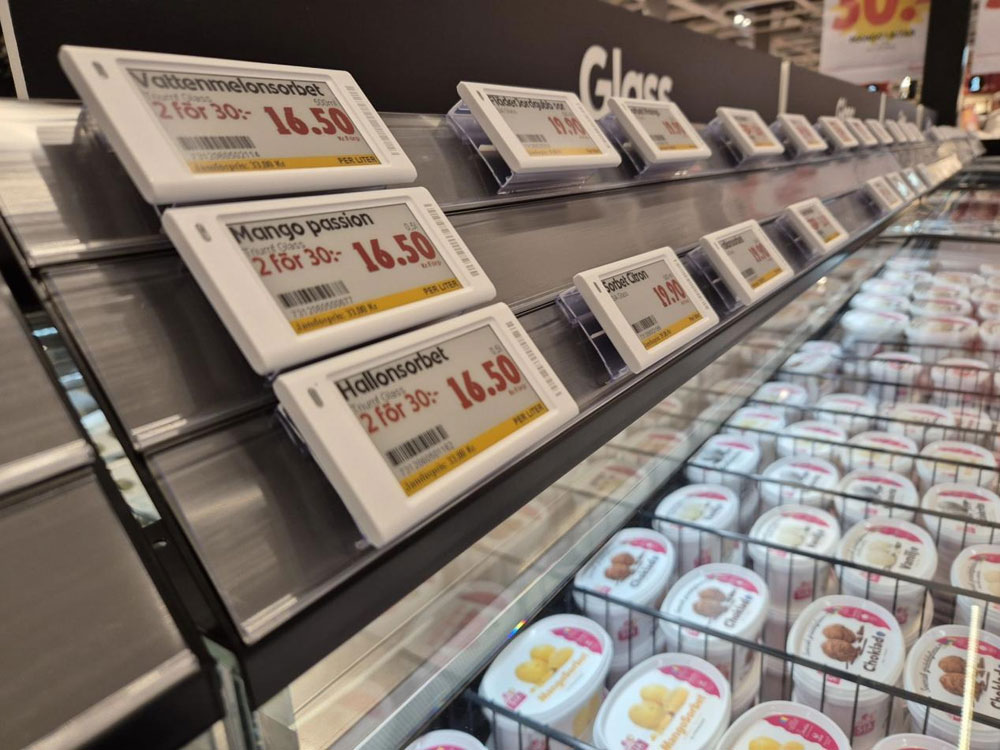
Launch, test, and adjust prices multiple times per day based on demand, competition, or inventory levels.
Roll out nationwide promotions in minutes while ensuring every shelf edge matches your strategy and your POS.
Eliminate overnight relabeling and weekend print marathons so associates can focus on selling and service.
Standardize execution across banners and markets, even when you’re short-staffed.
Remove price mismatches between shelf and checkout, a major driver of complaints and fines.
Keep start/end dates of promotions perfectly aligned with regulations and marketing campaigns.
Synchronize online and in-store prices from a single source of truth, so customers see the same deal in your app, website, and aisles.
Use QR codes and mobile journeys to bridge discovery, reviews, and purchase right at the shelf.
Replace millions of paper labels over the lifetime of your deployment, supporting net-zero and waste-reduction commitments.
Full-graphic e-paper combined with multi-year battery life reduces both material and operational waste.
Use layouts, icons, and colors to highlight promos, loyalty offers, and cross-sell recommendations.
Integrate with retail media platforms to monetize the shelf with paid brand content and time-of-day targeting.
The cost of an ESL system depends on store size, label quantity, and system complexity.
Labels: The largest upfront cost. Unit price depends on display size (from small for grocery shelves to large for end-caps), color, and features like LED indicators or NFC.
Gateways / base stations: Each store needs a number of access points, determined by store size, layout, and building materials.
Mounting accessories: Rails, clips, hooks, and specialized fixtures for different shelf types and categories.
ESL management platform: Per-store, per-label, or subscription-based licensing for the cloud/on-premises management system.
Integrations: One-off or project costs to integrate with POS, ERP, pricing engines, and e-commerce platforms, often via APIs or middleware.
In-store network upgrades or segmentation for ESL traffic, particularly if labels connect through Wi-Fi or require new Ethernet runs to gateways.
Possible redundancy solutions to ensure resilience, especially in large or mission-critical stores.
Design and planning: Site surveys, RF planning, and label quantity/placement planning to ensure coverage and performance.
Installation: Labor for mounting rails, installing gateways, and pairing labels with products. This can be phased by department or done all at once during refits.
Training: Educating store staff and central teams on how to use the ESL platform, design templates, and manage exceptions.
Battery replacement: In many modern systems, label batteries can last several years under normal update frequencies, but lifetime planning still matters.
Support and SLAs: Annual maintenance, software upgrades, and vendor support for troubleshooting and monitoring.
While ESL projects represent a significant capital investment, many retailers justify them through:
Labor savings from reduced manual label changes.
Reduced pricing errors and associated penalties or goodwill gestures.
Additional revenue from dynamic pricing, better promotion execution, and reduced waste in perishables.
Sustainability and brand benefits that support broader ESG strategies and investor expectations.
Source: https://www.coherentmarketinsights.com/market-insight/electronic-shelf-labels-market-593
Large retailers piloting and scaling ESL in 2025–2026 report that system-wide deployment can be financially compelling when spread over the labels’ multi-year lifetime and combined with other digital initiatives.(Source: https://www.cnbc.com/2026/03/21/walmart-digital-price-tags-will-be-in-every-us-store-by-end-of-2026.html)
Store Type | Labels | Estimated Cost |
Small store | 2,000 | $15,000 – $40,000 |
Supermarket | 10,000+ | $80,000 – $200,000 |
Most retailers achieve ROI in:
12–24 months, driven by:
· labor savings
· pricing accuracy
· increased sales from dynamic pricing
ZKONG positions itself as a global smart retail and IoT provider with a strong focus on security, scalability, and customization in ESL deployments.
Key elements of ZKONG’s ESL include:
Security-first design: Each label uses unique keys and encrypted communication, with options for customers to manage keys to reduce internal risk.
(More details: https://finance.yahoo.com/news/zkong-competes-esl-market-enhanced-080000493.html)
Robust manufacturing and quality: A large automated facility and ISO certifications for information security and quality management provide supply chain control and reliability.
Anti-theft and tamper resistance: Labels feature mechanical and software protections, including alarm or flashing alerts if removed or moved outside designated areas.
Cloud platform and customization: A cloud-native management system supports real-time updates, custom layouts, and compliance with regional regulations.
For retailers evaluating vendors, comparing end-to-end capabilities—security, integration, support, and total cost of ownership—is essential.
ESL is transforming very different retail environments—from U.S. big-box stores to European discounters and Middle Eastern mall-based grocery concepts.
North America is one of the fastest-growing ESL markets, driven by high labor costs, strong union environments, and omnichannel expectations.
Typical use cases:
Supermarkets and hypermarkets using ESL to support weekly and daily promo cycles, fuel loyalty programs, and ensure price integrity across hundreds of stores.
Big-box and specialty retailers leveraging full-graphic labels for rich product information, financing options, and QR codes linking to product reviews and configurators.
Chains rolling out nationwide dynamic pricing pilots (e.g., time-of-day pricing for certain categories) to optimize margin and reduce waste.
North America angle:
Strong focus on labor savings and operational resilience across large footprints.
Exec teams closely watch customer trust and price-integrity KPIs, making ESL a key tool for avoiding public pricing incidents.
Europe has been an early ESL adopter, propelled by stringent price transparency rules and now by the European Accessibility Act (EAA), which applies from 2025 to new and refurbished stores.
Typical use cases:
Discounters and supermarkets using ESL to manage high-frequency price changes while meeting strict labeling and transparency requirements.
Retailers modernizing stores to meet EAA standards by using ESL to offer larger fonts, higher contrast, and additional information for customers with visual or cognitive impairments.
Regulatory and best-practice angle:
ESL helps retailers demonstrate compliance with price-display and accessibility obligations, using multiple font sizes, contrasting colors, and flexible layouts tuned to different customer needs.
Given several high-profile ESL failures in Europe, retailers now scrutinize vendor reliability, security, and long-term quality more closely than ever.
For brands targeting Europe, positioning ESL as an enabler of both compliance and inclusive customer experience is a powerful narrative.
The Middle East combines some of the world’s most innovative mall-based retail with highly price-sensitive grocery shoppers. Digital adoption is high, and retailers are leaning into AI and real-time data to stay ahead.
Typical use cases:
Supermarkets and hypermarkets using ESL to react quickly to food cost volatility, run targeted promotions, and reduce waste in fresh categories.
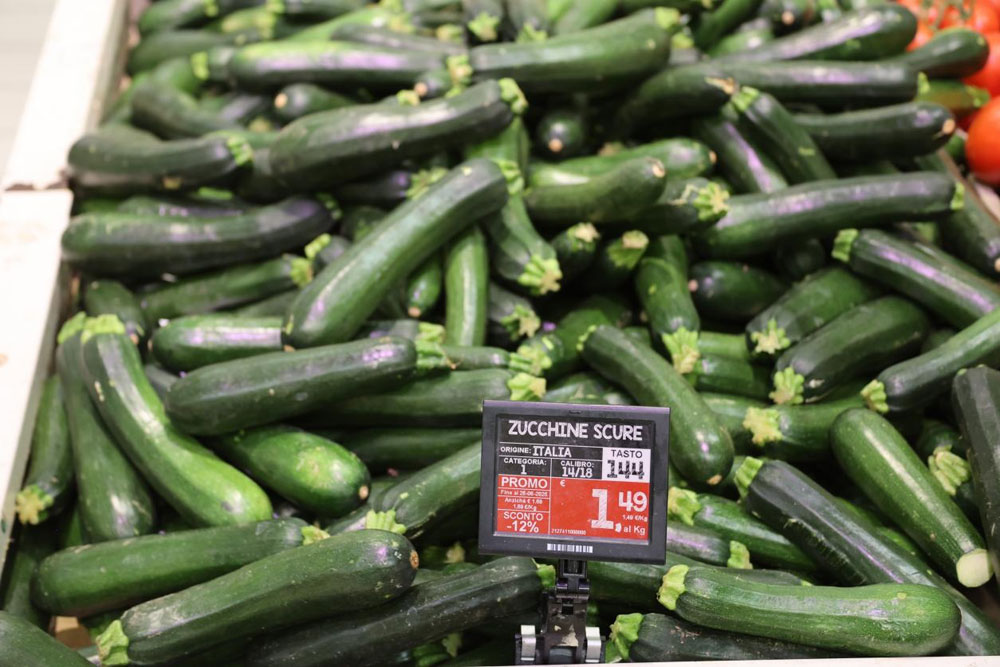
Mall-based grocers and department stores using ESL and QR codes to bridge physical stores with mobile journeys, loyalty apps, and home delivery services.
Regional groups consolidating banners and formats, using ESL as a standard platform to harmonize pricing and promotions across countries.
Regional dynamics:
Middle Eastern consumers are highly digital and value-conscious; retailers use ESL plus AI tools to tailor offers to local demographics and dayparts.
With omnichannel and retail security both rising in importance, ESL is often deployed alongside other smart retail technologies to create cohesive, secure shopping experiences.
For Middle Eastern markets, the winning story combines price competitiveness, freshness and waste reduction, and premium in-store experience.
To maximize adoption and impact, your go-to-market message should resonate with local pain points and regulations.
Region | Primary Drivers | Messaging Angle |
North America | Labor costs, omnichannel parity, scale of operations | “Automate pricing, protect margin, and deliver consistent experiences across every store and channel.” |
Europe | Compliance, accessibility, long ESL history, risk of failures | “Future-proof your stores for EAA and EU price rules with reliable, accessible, and secure ESL technology.” |
Middle East | Price sensitivity, digital-first consumers, mall culture | “Use smart shelf-edge pricing to balance value and experience, cut waste, and connect physical stores to digital journeys.” |
Cloud-native ESL platforms becoming standard
Integration with AI pricing engines
ESL evolving into retail IoT infrastructure
Use of analytics + shopper behavior data
To turn ESL from a tech project into a strategic growth lever, leading retailers follow a clear roadmap.
Align on business goals
Decide whether your priority is labor savings, dynamic pricing, compliance, in-store media, or a mix of these. This shapes everything from label selection to integrations.
Select the right partner
Evaluate vendors on security, reliability, integration capabilities, regional experience, and total cost of ownership—not just label price. Consider partners like ZKONG when cloud, security, and multi-region customization are critical.
Start with focused pilots, then scale
Pilot in representative stores and categories (e.g., high-promo grocery, electronics, or fresh) and measure KPIs across labor, accuracy, sales uplift, and waste reduction. Use these results to build your scale-up business case.
Design for operations and change management
Involve store teams early, provide intuitive tools, and make ESL part of daily routines—from replenishment to planogram execution. Shift the narrative from “new tech to manage” to “new automation that removes low-value tasks.”
Plan for regional nuances
Build configuration templates for North America, Europe, and the Middle East that incorporate local regulations, languages, currencies, and visual standards. Use your ESL platform’s flexibility to tailor without fragmenting your global architecture.
Electronic shelf labels are no longer just a “nice-to-have”—they are becoming core infrastructure for modern retail.
If you are a retailer evaluating ESL systems:
Choose based on scalability + system architecture, not just price
Consider cloud-based solutions like ZKONG for long-term flexibility
Focus on ROI, integration, and future readiness
An ESL system is a digital pricing solution that uses electronic shelf labels to automatically update product prices in retail stores.
Most systems cost between $15,000 and $200,000 per store, depending on size and requirements.
Typically a few days to a few weeks, depending on store size.
Cloud ESL systems (like ZKONG) offer:
remote management
scalability
lower infrastructure cost
If you're evaluating ESL vendors, don’t just compare price—compare architecture, scalability, and long-term ROI. ZKONG gives you all three. Request Your Custom ESL Solution Today.
 Electronic Shelf Labels
 Digital Signage
 Cloud Platform
 ESL Accessory
 中文
中文 English
 日本語
日本語 français
 Deutsch